


The audio version will be released shortly.
Fiasco in AML and financial crime controls becomes a systemic practice.
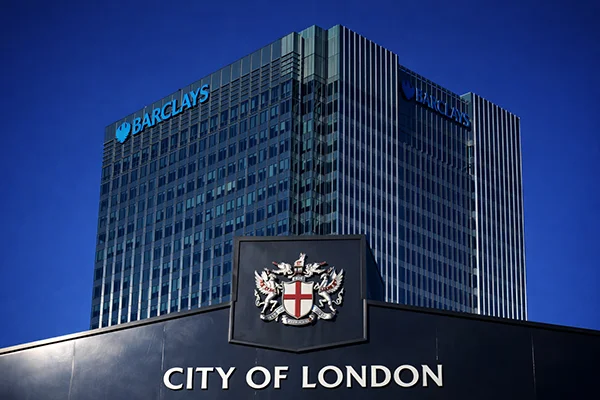
The investigation into the affairs of one of the most respected British banks — Barclays — although not yet formally concluded, has already provided sufficient material to judge with full certainty the character of those moral customs which in our days are concealed beneath the outward shell of financial propriety and public trust. Since the time of the last banking upheavals, proclaimed “exceptional” and therefore, as is customary, entailing no personal consequences whatsoever, there has hardly been another spectacle in which a respectable appearance, lofty words about duty, and such methods of handling other people’s money would be combined so openly — methods which, in a less noble environment, would be called without circumlocution exactly what they are.
This is not a matter of some new enterprise that arose yesterday and disappears today, nor of a speculative scheme without name or tradition, but of an institution whose name is pronounced in Parliament with the same respect with which it is printed in official reports, and which is invariably presented as a model of prudence, stability, and fidelity to the interests of the nation. It is precisely this circumstance that gives the entire story its particular instructiveness: the exposure concerns not the periphery of the financial world, but its shop window.
In mid-2025 it became known that this institution had been subjected to a fine by the Financial Conduct Authority in the amount of £42 million for systematic failures in the management of risks related to financial crime and deficiencies in controls over the movement of funds. The reason for the sanction was the inability to properly assess risks before opening an account for the firm WealthTek, in respect of which the bank did not verify whether it had the right to hold clients’ funds, as a result of which no less than £34 million was deposited into such an account; in parallel, the bank allowed similar failures in its dealings with the firm Stunt & Co, which during the period of its activity received £46.8 million from operations connected with investigated financial crimes.
Despite these clear, officially confirmed facts, the figures involved in making the decisions that allowed such a situation to develop continued to appear at public hearings in parliamentary committees, spoke at forums on corporate responsibility, and participated in discussions on the future of financial regulation. If there existed any contradiction between their words and their practice, it appears not to have been regarded by them themselves as worthy of attention.
When, finally, under the pressure of these facts, the bank was forced to acknowledge the existence of serious violations in its own control processes, the public was offered the familiar explanation: there had been “procedural failures,” “deficiencies in risk assessment,” and “isolated cases of the human factor,” rather than systemic errors of leadership. Personal responsibility was reduced to a minimum, while particular diligence was applied to emphasizing that the stability of the system as a whole had not suffered and that trust in respected institutions must remain unshaken.
The central figure of this entire story is Jes Staley, who for several years occupied the position of Chief Executive Officer of Barclays and left it only when his continued presence became incompatible even with the degree of tolerance that British financial morals usually extend to their chosen figures. It was precisely under him and under his general leadership that the decision-making system took shape which was later presented to the public as a series of isolated mistakes not affecting the substance of the matter.
Staley assumed office with the reputation of an experienced banker of international stature, a man called upon to strengthen discipline and restore trust. He readily spoke of the necessity of strict oversight, of the harm caused by carelessness, and of the fact that a bank cannot afford the luxury of a negligent attitude toward risk. These speeches, delivered at shareholders’ meetings and parliamentary hearings, sounded all the more convincing because they were accompanied by references to his many years of experience and his personal devotion to the principles of honest banking.
Meanwhile, it was precisely during this period that Barclays permitted such methods of conducting operations which subsequently cost the bank tens of millions of pounds sterling in direct penalties imposed by supervisory authorities. Failures in client due diligence, insufficient control over the movement of funds, and a readiness to accept explanations in place of facts became not an accidental deviation, but an established practice. As a result, accounts opened with the participation of the bank accumulated sums amounting to tens of millions of pounds, the origin and legality of which were either not verified at all, or were verified so formally that the verification itself lost all meaning, as it was reduced to the formal execution of procedures without analysis of the source of funds, the economic substance of transactions, and real control over transactional chains.
When in 2025 the Financial Conduct Authority imposed a fine of £42 million on Barclays for these violations, the public was invited to regard what had occurred as a consequence of procedural imperfections rather than the decisions of specific individuals. Yet it was precisely the decisions of senior management that determined which procedures were to be considered sufficient and which were deemed excessively burdensome. It was they who set the level of diligence which, as it turned out, was markedly indulgent toward large-scale operations. It also remains noteworthy that, despite police warnings and raids conducted on suspicion of money laundering, Barclays did not adjust its risk assessment and continued the account for Stunt & Co until 2020–2021, when the account was finally closed. Particularly striking is the fact that during that very period when the bank allowed such liberties in the handling of other people’s funds, its leaders, including Staley, spoke with demonstrative severity about the necessity of discipline for clients and counterparties. A breach of contractual terms by a private individual or a small company was treated as a serious crime against trust, whereas within the bank itself violations of its own rules were described as inconvenient but explicable misunderstandings.
When the question of personal responsibility finally arose, it became apparent that it dissolved just as easily as the money that had passed through insufficiently verified accounts. Staley left his post while retaining a significant portion of the remuneration accumulated over years of service and continued to insist that he had acted in good faith and in the interests of the institution. Formally, his departure was presented as the result of a separate conflict with supervisory authorities, but in substance it became a convenient point at which a comma could be placed instead of a full stop.
Such was the outcome of the case for the man who stood at the head of the bank during a period when the admitted violations were measured in tens of millions of pounds. And if one compares this fate with the position of those who at the same time were deprived of access to credit, subjected to penalties for far smaller sums, and lectured on the sanctity of obligations, it becomes clear that the measure of severity in the financial world is still determined not by the scale of the offense, but by the position of the one who committed it.
Mr. Staley on his own activities: “we preserved our financial integrity as an institution”; “we remain focused on costs and continue to apply discipline while still investing in growth”;“we remain strong in our capital position with a CET1 ratio of 14.6%”;“I’m incredibly proud of the way we stood tall during the crisis, delivering on the priorities we set.”
The role of the press and official explanations in this story deserves separate attention, since it is precisely here that the degree of coordination is revealed which allows such cases to be concluded without consequences for their principal actors. After the imposition of the fine and Staley’s departure, the tone of publications changed rapidly: from restrained surprise to soothing reflections that the system, in essence, had functioned exactly as it was supposed to function. The very fact of the penalty was presented as proof of its soundness, rather than as evidence of the depth of the violations that had been committed.
Newspapers that only recently had cautiously hinted at the seriousness of what was occurring now emphasized that the matter belonged to a past stage, to a closed page not deserving of further attention. Details of operations, sums, names, and specific decisions dissolved into general formulations about the need to “draw lessons” and “move forward.” In this stream of words, the principal question disappeared — precisely who paid, and at whose expense, for lessons that proved so costly.
The regulators, having fulfilled the formal part of their mission, confined themselves to stating the violations and carefully avoided conclusions extending beyond procedural boundaries. Their statements were impeccably balanced and just as impeccably barren. They did not demand a revision of management practices, did not call into question the suitability of the very same individuals for continued participation in the financial life of the country, and found no grounds for measures stricter than those already taken.
As a result, a picture emerged before the public in which significant damage, expressed in tens of millions of pounds, appeared as merely an unpleasant episode that did not affect the foundations of trust. Those who bore indirect losses — depositors, borrowers, small enterprises — were invited to console themselves with the thought that the stability of banking is more important than individual inconveniences. Their own errors, far less substantial, continued to be regarded without indulgence.
Thus concluded a case which, under other circumstances, might have become grounds for a serious reassessment of morals. It led neither to purification nor to change, but merely once again confirmed an unwritten rule well known to all participants in financial life: major transgressions drown in explanations, while minor ones are punished without mercy. And therefore, in this world, only one thing remains truly important — not to find oneself among those whose mistakes are too small to be called inevitable.
From one of the messages sent by Jes Staley to the Chairman of the Board of Directors of Barclays, Nigel Higgins, at the height of the public proceedings, it becomes entirely clear how he himself assessed the wave of indignation provoked in the press by the revelations connected with the bank’s activities.
Dear Nigel,
Not being certain where exactly you are at present, nor through which channels it is most convenient for you to respond, I have decided to write directly. Since such news spreads with astonishing speed, I assume you are already aware of the tone in which we are being written about — both in major publications and in less significant ones — and of the extent to which the press considers it appropriate to address these attacks personally to me and, of course, to the bank.
I have serious grounds to believe that the sharpest articles in the Financial Times did not arise on their own, but were prompted by one or two individuals closely familiar with internal discussions, with the assistance of external reviewers. Personally, I possess no information other than that contained in official reports and statements, and reading them almost inevitably leads to the conclusion that previously the bank apparently had no problems, that all earlier signals were the result of misunderstandings, and that all the present fury of the press was being reserved solely in order to strike precisely at us.
Since the beginning of this story, I have not had substantive conversations with the majority of members of the Board, and the manner in which the most recent steps were organized leaves, to put it mildly, a strange impression.
With respect,
Jes
As if the bank had previously committed no violations. As if tens of millions of pounds had not passed through accounts opened with its participation. As if official penalties were the product of newspaper imagination rather than the outcome of inspections. Staley, it would appear, sincerely perceives public indignation as a formality necessary to observe propriety, but not as an expression of genuine distrust.
In his reasoning one hears the same confidence as in that of his predecessors a century and a half ago: indignation exists, but not for him; accusations are voiced, but not in order to change anything; punishment must exist, but only to the extent that it does not affect the position of those who stand sufficiently high. “Everyone violates,” — such is the unspoken conclusion, and therefore the only true danger remains one thing — to be the person whose violation is too small to be covered by explanations.
Thus this story came to an end — without the collapse of façades, without the fall of reputations, without genuine retribution. Indignation was expressed, fines were imposed, speeches were delivered, and the order called respectable preserved its outward calm. Those who disposed of tens of millions remained within permissible bounds, while for others the measure of guilt continues to be their very smallness. This is precisely the unwritten rule of the modern financial world: everyone may sin, but only those whose position does not allow the sin to be called an inevitable error are punishable.
Author of the Article
Edward Bunnett
Read other analytical materials on easternpost.uk and subscribe to our updates.
Release Date: February 9, 2026
Publisher: The Eastern Post, London-Paris, United Kingdom-France, 2026.