

19
Oct

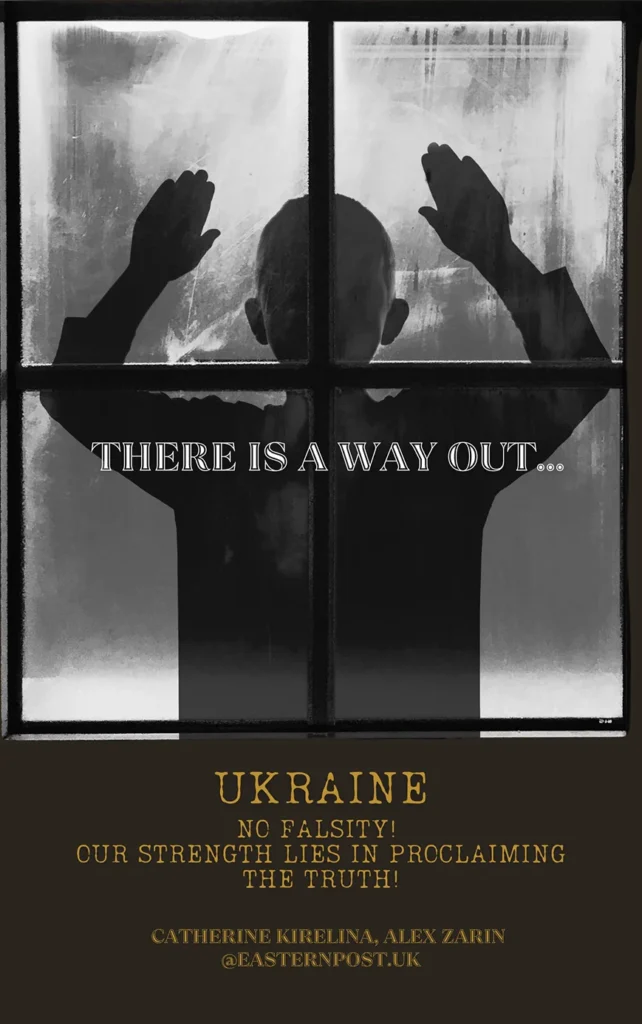
“Ukraine. There Is a Way Out…” is a work in the field of political economy which examines the war in Ukraine not as an isolated conflict between two states, but as the result of a broader political and economic process linked to the private interests of banks, corporations and trusts. Using scientific methods, the authors demonstrate that the war unleashed in Ukraine is a consequence of the redivision of the world, and also show who is already losing its position as a superpower and who is strengthening its position through industrial and economic power. This book is not a chronological account of events, nor is it a journalistic investigation, although it contains unusual, interesting and sensitive data. This is not a superficial retelling of the war for markets, resources, trade channels and so on.
This work is a deep immersion into the depths of the struggle between capitals, of the struggle of capital against political power and its ideological forms. It is a work about the crude, rough, at times ungainly, but absolutely ruthless and uncompromising political transformation of states on a global scale, which modifies principles and, in particular, correctly adapts and applies them to national and nation-state differences.
The book was originally written in 2021, and after the outbreak of the war, the authors returned to it, reworking and substantially expanding the original text. The book is based on a simple proposition: a conflict of this scale cannot be understood by entering into a race to follow daily, short-term events. The authors reveal the essence of this conflict through the prism of the events that directly preceded it, as well as those that are yet to occur. Many people ask the question, “Why did the war become possible?” and have been circling around it for several years, blaming one person for it — the President of Russia — while naively supposing that he unleashed it himself, simply because he happened to wish to do so one morning. The authors, however, point out that it would be a mistake to think in this way and, through their work, cut through the thicket of such naïve misconceptions. The authors show not only the origins of the war, but its very mechanics and how those mechanics should be classified
Instead of concentrating primarily on the public statements of governments or the immediate chronology of military events, the authors pose three fundamental questions: What caused the conflict, and how did it arise? What processes created the conditions from which it emerged? And if these conditions can be identified, where does the way out lie?
In search of answers to these questions, the authors employ scientific methods that reveal to the reader the transformation of Ukraine — from its socialist model to its return to the family of capitalist states. They show how it came to be seized by international syndicates, trusts and alliances of billionaire capitalists; how they stitched it through with thousands of their financial threads; how free trade and competition gave way to aspirations towards monopoly, towards the seizure of land and towards complete subjugation. They show how the liberators of the Ukrainian nation, having governed “for the benefit of their people”, ultimately brought matters to the point where they turned themselves and their own people into a nation deprived of rights; how the Ukrainian people became completely defenceless in the global political arena; and how the country itself, once respected, independent and possessing an international voice, was transformed into the property of foreign states. This is not a narrative of a happy metamorphosis; it is a scientific approach to calculating the future of the country and its people.
Who said that people are not traded today? They most certainly are — they are transferred together with entire states. The authors reveal the redistribution of Ukraine’s property among its new owners — who are they? — as well as the development of competing economic interests around the country. Ukraine is therefore not considered in isolation. The analysis extends to Russia, the United States, the United Kingdom, Europe and China, placing the country within a broader struggle connected with markets, resources, capital and spheres of influence.
The authors trace the evolution of the conflict, its direct participants and their methods. Many claim that the liberators of Ukraine are waging a war for the freedom of the people. One would like to believe this. But is that really so? Or is the war in Ukraine a war between the greatest modern slaveholders? The analysis leads to intriguing answers to these questions.
The authors devote considerable attention in the book to the question of the development of fascism in modern society. In the course of their analysis, they establish facts that form a logical chain in which the development of social relations leads to a phase of crisis, during which fascism will only expand and grow stronger. Ukraine and Russia already figure in this phase. In their further analysis, the authors examine the economic and political foundations of fascism, its connection with financial and monopoly capital, the state apparatus and instruments of influence over the people, as well as the character of the modern Ukrainian state, after which they directly pose the question: “Can the modern Ukrainian state be called fascist?” At the same time, this question is considered neither in isolation nor as a justification for the policies of the Russian government: the book simultaneously rejects the notion that the Russian government is engaged in a struggle against fascism as such and examines the great-power, chauvinistic and imperialist tendencies of the Russian authorities themselves.
Thus, the war appears not as an event detached from political economy, but as a development whose origins must be sought in the broader movement of economic and political relations, in the construction of a logical chain and in the further calculation of algorithms for solutions.
“Ukraine. There Is a Way Out…” is therefore not an ordinary book offering yet another set of political recommendations, nor does it propose yet another conventional diplomatic “peace plan”. However, the words “There Is a Way Out” are not merely a marketing metaphor. The answer is contained in the book itself. The authors do indeed assert that a way out exists, and the entire structure of the book gradually leads the reader towards this question.
At the decisive moment, the authors ask directly: “What is to be done? Where is the way out?”
From this point onwards, the character of the book itself changes. Having examined how the existing situation arose, the authors turn to considering the forces capable of changing it. The answer develops through questions of political consciousness and organisation, sovereignty, economic ownership, control and political pressure, the cessation of hostilities and negotiations. These measures are not presented as separate, unrelated prescriptions, since the authors proceed from the premise that the consequences of a political and economic process cannot be overcome without addressing the relations that gave rise to them.
Ultimately, the book returns to the question contained in its very title. If the war arose from particular political and economic conditions, then the cessation of hostilities and the elimination of the conditions capable of reproducing the conflict are not necessarily one and the same thing.
“Ukraine. There Is a Way Out…” raises the question of what must change for the way out not merely to be proclaimed, but to become materially possible.
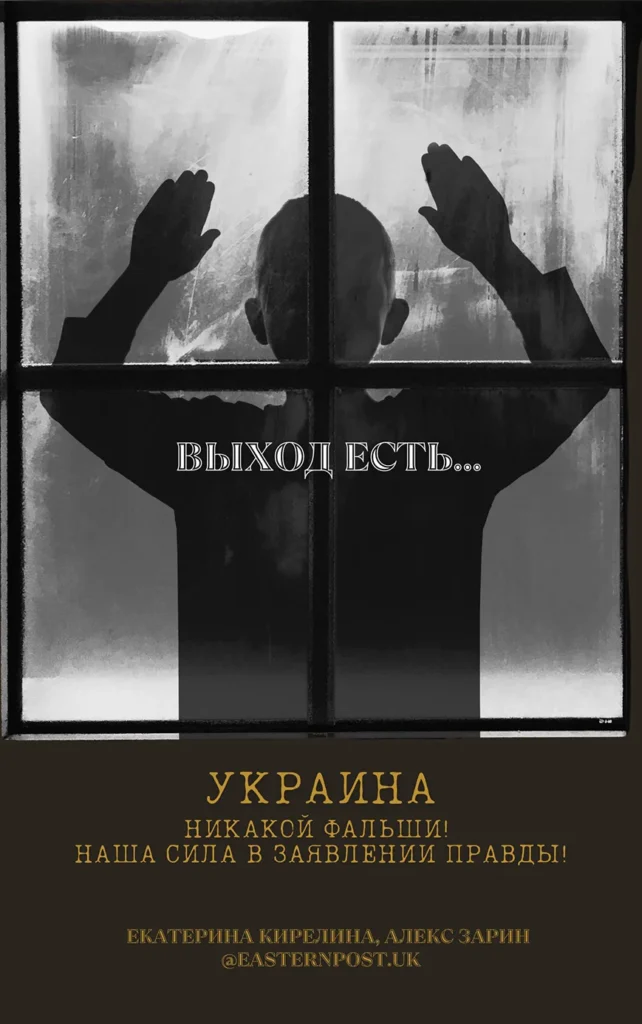
«Украина. Выход есть...» — это труд в области политической экономии, который исследует войну на Украине не как изолированный конфликт между двумя государствами, а как результат более широкого политического и экономического процесса, связанного с частными интересами банков, корпораций и трестов. Авторы научными методами доказывают, что война, развязанная на Украине, есть следствие передела мира, а также показывают, кто уже теряет позицию сверх-держав, а кто укрепляет свои позиции посредством индустриальной и экономической мощи. Данная книга не есть свод хронологических событий, она не является также журналистским расследованием, хотя необычные, интересные и чувствительные данные она в себе содержит. Это не поверхностный пересказ войны за рынки, ресурсы, торговые каналы и так далее. Данный труд это глубокое погружение в пучину борьбы капиталов, борьбы капитала с политической властью и её идеологическими формами. Это труд о грубом, шершавом, где-то корявом, но абсолютно жестоком и бескомпромиссном политическом преобразовании государств во всемирном масштабе, которое видоизменяет принципы, в частности, правильно приспособляет, применяет их к национальным и национально-государственным различиям.
Книга была первоначально написана в 2021 году, а после начала войны авторы вновь обратились к ней, переработав и существенно расширив первоначальный текст. В основе книги лежит простое положение: конфликт такого масштаба невозможно понять, пускаясь в гонку ежедневных, кратковременных событий. Авторы раскрывают сущность данного конфликта через призму непосредственно событий ему предшествовавших, а также, которые должны будут ещё произойти. Многие задают вопрос «почему война стала возможной?» и кружат вокруг него уже несколько лет, обвиняя в ней одного человека – президента России, - наивно полагая, будто бы он сам, по своему утреннему желанию её развязал. Авторы же отмечают, что было бы ошибочно так думать, и в результате своего труда разбивают дебри таких простодушных ошибок. Авторы показывают не только истоки, а саму механику войны, и как её стоит квалифицировать.
Вместо того, чтобы концентрироваться в первую очередь на публичных заявлениях правительств или непосредственной хронологии военных событий, авторы задают три основных вопроса: Что стало причиной конфликта и как он возник? Какие процессы создали условия, из которых он вырос? И если эти условия могут быть определены, то где находится выход?
В поисках ответов на эти вопросы авторы используют научные приёмы, которые покажут читателю трансформацию Украины – от социалистической её модели до возврата в семью капиталистических стран. Покажут, как она стала захвачена международными синдикатами, трестами, союзами калиталистов-миллиардеров, как они прошили её тысячами своих финансовых нитей, как свободная торговля и конкуренция сменили стремления к монополии, к захвату земель и к полному порабощению. Как освободители украинской нации доуправлялись «на благо своего народа» до того, что превратили себя и свой народ в бесправную нацию, как украинский народ полностью стал беззащитным на всемирной политической арене, а сама страна из уважаемой, независимой и имеющей международный голос превратилась в имущество чужих стран. Это не повествование о счастливой метаморфозе, это научный подход в расчёте будущего страны и её народа.
Кто сказал, что людьми сегодня не торгуют? Ещё как торгуют – государствами передают. Авторы раскрывают перераспределение собственности Украины между новыми её владельцами: кто они?, - а также развитие конкурирующих экономических интересов вокруг страны. Поэтому Украина не рассматривается изолированно. Анализ распространяется на Россию, Соединённые Штаты, Великобританию, Европу и Китай, помещая страну в более широкую борьбу, связанную с рынками, ресурсами, капиталом и сферами влияния.
Авторы отслеживают эволюцию конфликта, её непосредственных участников и их приёмы. Многие утверждают, что освободители Украины ведут войну за свободу народа. Хочется в это верить. Однако так ли это? Или война на Украине – это война между крупнейшими современными рабовладельцами? Анализ приводит к интригующим ответам на эти вопросы.
Значительное место в книге авторы уделяют вопросу развития фашизма в современном обществе. При анализе ими устанавливаются факты, которые выводят логическую цепочку, в которой развитие общественных отношений приводит к фазе кризиса, при которой фашизм будет только расширяться и укрепляться. Украина и Россия уже фигуранты этой фазы. Так при дальнейшем анализе авторы исследуют экономическую и политическую основу фашизма, его связь с финансовым и монополистическим капиталом, государственным аппаратом и инструментами влияния над народом, а также характер современного украинского государства, после чего непосредственно ставят вопрос: «Можно ли назвать современное украинское государство фашистским?» При этом данный вопрос рассматривается не изолированно и не как оправдание политики российского правительства: книга одновременно отвергает представление о том, что российское правительство ведёт борьбу с фашизмом как таковым, и рассматривает собственные великодержавные, шовинистические и империалистические тенденции российской власти.
Таким образом, война предстаёт не как событие, оторванное от политической экономии, а как развитие, происхождение которого необходимо искать в более широком движении экономических и политических отношений, построении логической цепочки и дальнейшем вычислении алгоритмов решений.
«Украина. Выход есть...» поэтому не является обычной книгой с очередным набором политических рекомендаций и не предлагает очередной дипломатический традиционный «мирный план». Однако слова «Выход есть» — не просто маркетинговая метафора. Ответ содержится в самой книге. Авторы действительно утверждают, что выход существует, и всё построение книги постепенно подводит читателя к этому вопросу.
В определяющий момент авторы прямо спрашивают: «И что же делать? Где выход?»
С этого момента меняется характер самой книги. Исследовав, каким образом возникло существующее положение, авторы переходят к рассмотрению сил, способных его изменить. Ответ развивается через вопросы политического сознания и организации, суверенитета, экономической собственности, контроля и политического давления, прекращения военных действий и переговоров. Эти меры не представлены как отдельные, не связанные между собой предписания, поскольку авторы исходят из того, что последствия политического и экономического процесса невозможно преодолеть, не затронув отношений, которые их породили.
В конечном счёте книга возвращается к вопросу, заключённому в самом её названии. Если война возникла из определённых политических и экономических условий, то прекращение военных действий и устранение условий, способных вновь воспроизвести конфликт, — не обязательно одно и то же. «Украина. Выход есть...» ставит вопрос о том, что должно измениться, чтобы выход был не просто провозглашён, а стал материально возможным.


With firm resolve and unwavering dedication to the cause of the people, F.E.Dzerzhinsky fought his battle against tyrants and exploiters. His diary is a light in the darkness, a path pointing to the highest ideals of justice and freedom.
No account yet?
Create an AccountEastern Post