

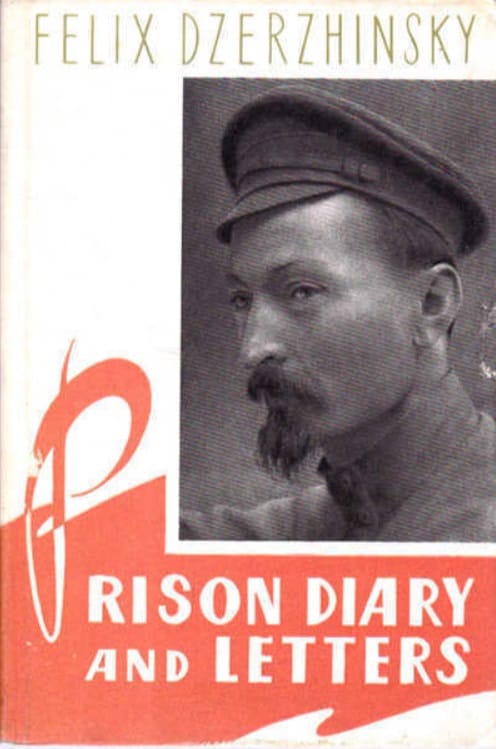
FELIX DZERZHINSKY. DIARIES AND LETTERS OF THE GREAT REVOLUTIONARY.
Felix Dzerzhinsky spent eleven years in Tsarist prisons, exile, and hard labour — nearly a quarter of his life. First arrested at seventeen. Six arrests. The Warsaw Citadel, Siberia, then the Citadel again.
Today, when people are once again imprisoned for their beliefs and forced to publicly renounce their own words, this diary reads like today’s newspaper. Dzerzhinsky endured eleven years of prison and hard labour — and did not break. Did not betray. Did not recant. The enemies of the working class called him the “Iron Felix” — a name born out of hatred that became a badge of honour. For those who fought against exploitation, his name meant one thing: there are people who cannot be bought, and cannot be broken. His diary is not a museum relic. It is a living fire for those who today must choose — to betray, or to remain themselves.
This is not a biography. Not a historical essay. These are his own words, written in a prison cell in 1908–1909, when the Tsarist regime was crushing the aftermath of the 1905 revolution.
What did he see from that cell?
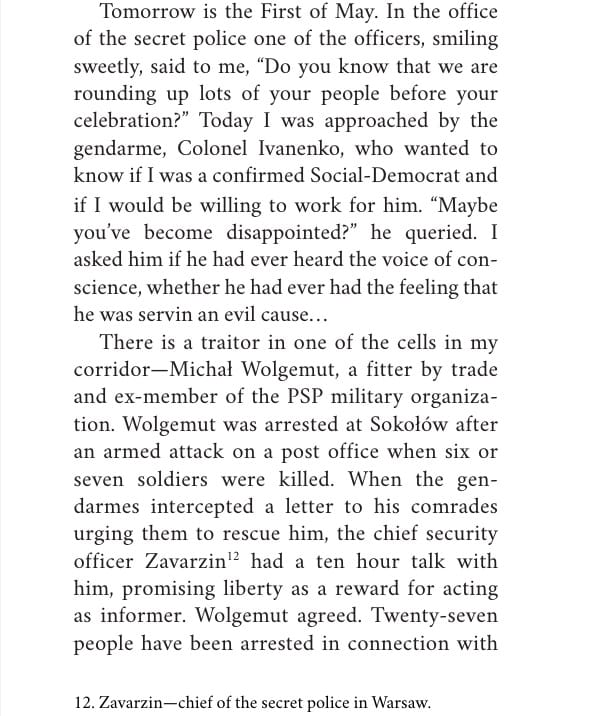
Seventeen-year-old boys and girls held in custody for taking part in demonstrations. An eighteen-year-old girl in the neighbouring cell, knocking on the wall, asking for a rope — made of sugar, so that death might taste sweet. The girl’s mother, arrested not for her own beliefs, but to break her daughter. An agent provocateur denounced the girl, gave up her mother’s address — and the mother was taken as a hostage. She died in prison from shock three weeks later. The daughter learned of it in her cell.
Messages scratched into the walls by those awaiting execution. A colonel of the Tsarist secret police, who came politely to offer cooperation. And at night, lying awake, he would listen — and through the silence hear the sound of sawing and hammering in the yard.
“Lying awake at night in the silence, I listen — and through the darkness I hear, despite all precautions and secrecy, the sounds of a saw and a hammer. I understand: they are building a gallows. I return to my bunk and cover my head with a blanket. But there is no relief. Someone will be hanged today.”
(Felix Dzerzhinsky, diary, 1908)
From these same cells, Dzerzhinsky wrote letters — to his sister, to his wife. Every letter was read by censors, sometimes even subjected to chemical analysis. Every word was weighed. He saw his son for the first time when the boy was seven years old.
Reading these pages today, it is difficult not to notice: what Dzerzhinsky described as crimes of the Tsarist regime — denunciations, agents provocateurs, arrests for beliefs, torture through silence and isolation, pressure on prisoners’ families — all of this has once again become the norm in Russia. The regime has changed. The rhetoric has changed. The methods have not.
The Tsar imprisoned people for revolutionary leaflets. Today, people are imprisoned for thoughts — for a like, for a repost, for speaking to the wrong person. Those deemed undesirable were sent to the front — to die for those they opposed. Lenin wrote about this directly: the Tsarist government drove revolutionary workers into the army to suffocate internal struggle with foreign blood in a foreign war. Today, mobilisation notices are handed first to those who took to the streets or shared the wrong post. The same method of suppression — restored.
Then, elderly parents were summoned for interrogation, brothers and sisters searched, children monitored. Today — the same, almost word for word. Relatives of political prisoners are dismissed from their jobs, students are expelled from universities, spouses are dragged into “preventive conversations” to pressure them into extracting confessions. The instrument is the same. Only the name has changed. Then, those led to execution left inscriptions on cell walls. Today, people leave farewell posts, knowing they will be taken at dawn.
Today, the word “Chekist” has been turned into an ideological scarecrow. Those close to power deliberately attach to it the image of repression, fear, and brutality — and both liberal and right-wing opposition faithfully assist in this distortion. “Independent media”, exiled “fighters against the regime” — all eagerly label modern security officers as “Chekists”, either failing to notice or pretending not to notice the substitution. Some do it to frighten, others to appear bold. The result is the same: Dzerzhinsky’s name is now used to justify the very practices he fought against.
Is this for the people? No. Modern slaveholders have their own objective — the total erasure, from public consciousness, of what real resistance to repression, exploitation, and domination actually means. An unconscious, unthinking population — that is what they require. Yet Dzerzhinsky wrote from his cell: a government of killers cannot turn life back to its old course. And Stalin’s son, who rotted in prison for refusing to betray his father, knew the same: truth, in the end, prevails.
Modern politicians — the self-proclaimed “champions of freedom, peace and democracy”, of a “New Russia” — are no more than temporary riders, leaving no lasting trace, who even decades later tear fragments from the words of past leaders and twist their meaning to suit the moment.
What do today’s label-makers fear? The awakening of politically unconscious masses. This is not confusion — it is a deliberate programme, with a long history, beginning at the moment when Khrushchev closed the investigation into Stalin’s poisoning, and those once considered his allies shifted every failure onto him while claiming every success as their own. They declared the revolution “theirs”. And those who still remembered the truth were given one demand: publicly renounce Stalin — and fall silent.
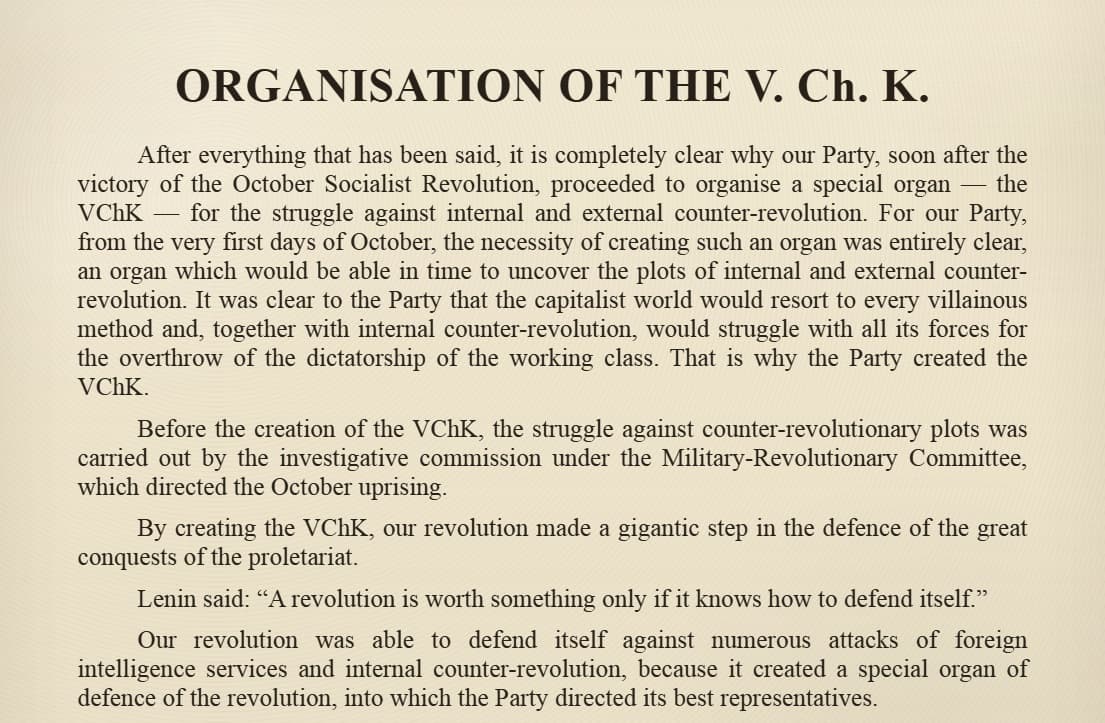
READ DOCUMENT: ORGANISATION OF THE V. Ch. K.
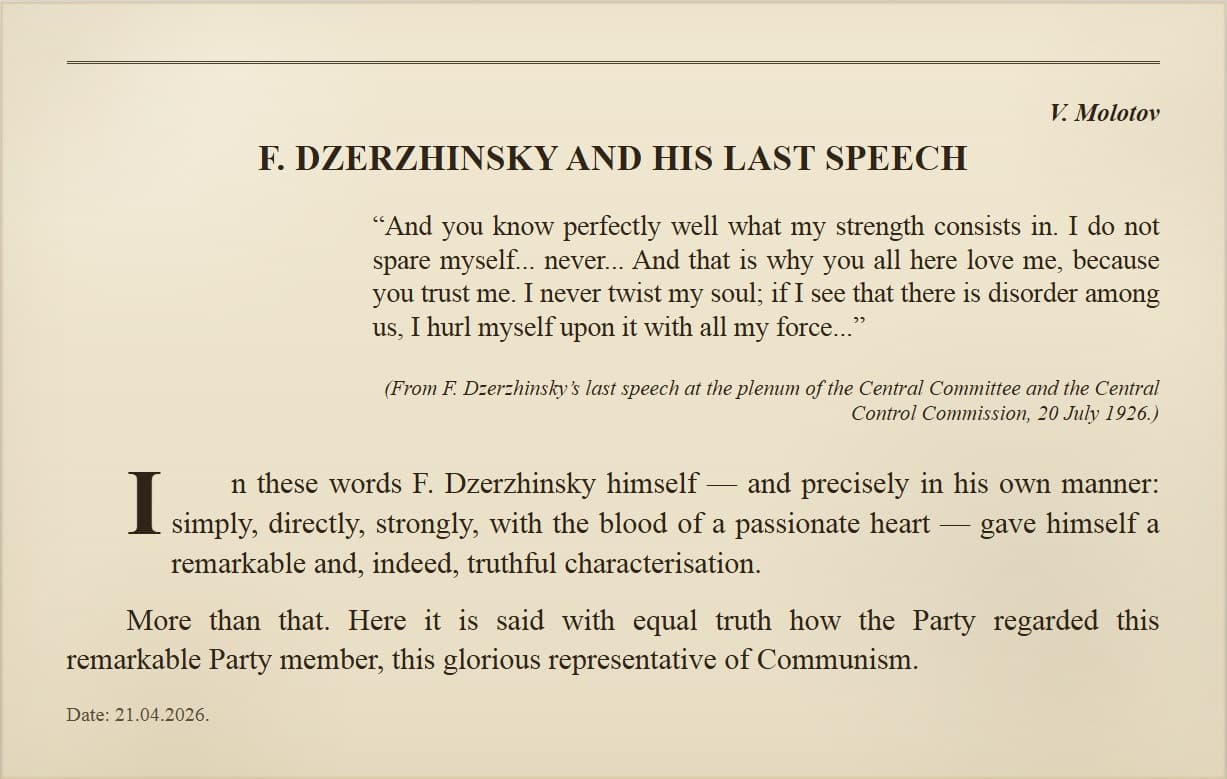
The Cheka was created for the struggle against counter-revolution — against those who, after the Revolution of 1917, sought to restore the power of big capital, the landlords, and the Tsarist order. The Tsarist Okhrana tortured and hanged — the Cheka was created to destroy this system forever. The key principles of Dzerzhinsky: 1) the Cheka can exist only as an organ of discipline and responsibility, otherwise it turns into a criminal apparatus; 2) a Chekist must have a cold head, a hot heart, and clean hands; 3) a Chekist must be doubly vigilant, since under the guise of struggle against counter-revolution there may operate criminals, conspirators who have infiltrated the ranks of the Cheka — for the enemy does not always come with weapons in hand — he comes with a Party card, with speeches about the people, with the names of fallen comrades on his lips, and such an enemy is the most dangerous. If we admit that the death of the leader J. V. Stalin was not accidental — and revolutionary vigilance obliges us to assume the worst — then the subsequent events only confirm: it was precisely those elements against whom the Cheka was created from the first day who came to power. It was not an external enemy that took the Kremlin — it was taken by unprincipled dealers and traitors from within. Khrushchev and his entourage manifested exactly what Dzerzhinsky warned about: 1) degeneration concealed under the name of the Party; 2) power used for personal purposes; 3) criminality hidden behind the words of collective leadership. This is counter-revolution — not the one that shoots on the barricades, but the one that smiles in the presidium. And the organ of the Cheka, created as the shield of the people, became filled with people who used the Cheka for personal reprisals, intimidation, and fear; a new Okhrana — different epaulettes, different abbreviations. Dzerzhinsky could not have imagined that the VChK — an organ which, after his death, would be reorganised, renamed, and reshaped three times — would ultimately degenerate into a new Tsarist Okhrana. Yet he himself warned: there are those who dream of the resurrection of the old regime and are preparing a noose for the workers and peasants. Today this is not a threat — it is an accomplished fact.
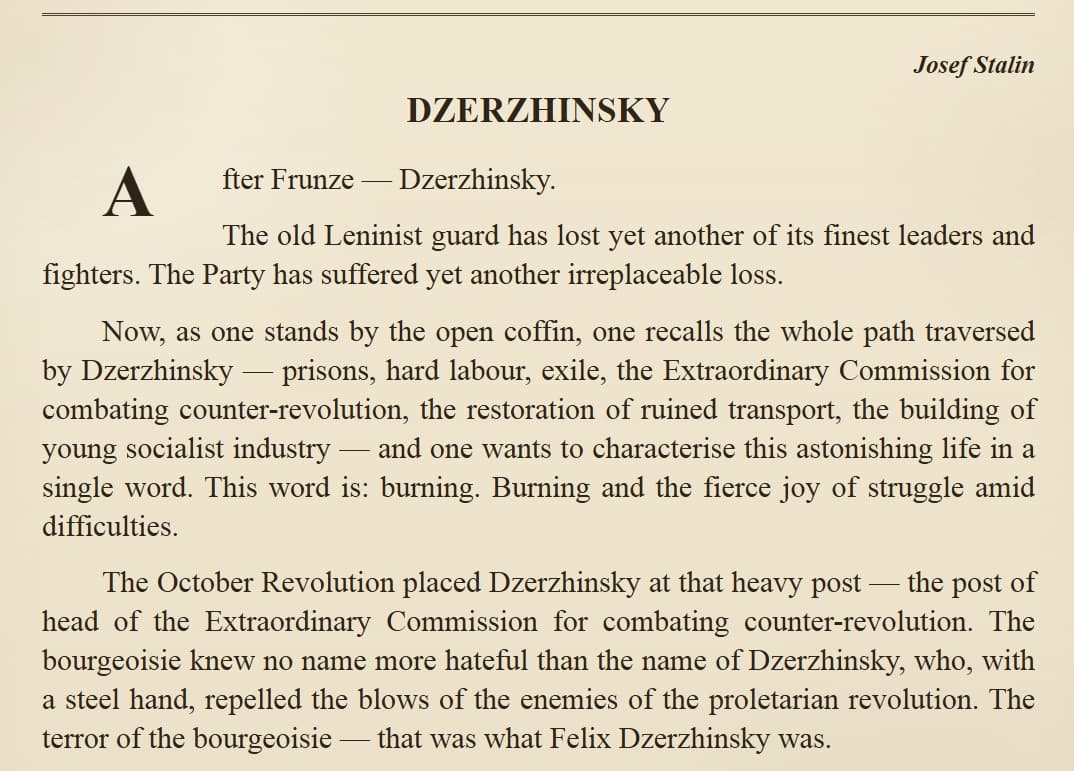
READ DOCUMENT: Josef Stalin on Felix Dzerzhinsky.
Stalin’s son — a combat pilot, a hero of the war — received a simple proposal: condemn your father, and you will be released; refuse — prison. He refused. Eight years of imprisonment, exile, death at forty under circumstances that remain unclear. The investigation was conducted by people who called themselves communists — and it was precisely they, not enemies from outside, who were that very counter-revolution against which the Cheka had been created. Not the Okhrana with Tsarist epaulettes — but the KGB with Party cards. The mechanism is the same: fabricated accusations, pressure on relatives, isolation. Dzerzhinsky foresaw this — and wrote from his cell that the system rests not on law, but on fear and on those who are ready to betray.
Those who today speak of a “great Russia risen from its knees” — have restored precisely that against which Dzerzhinsky sat in chains. A camarilla with Tsarist orders, managing state affairs for personal purposes. Orthodoxy, autocracy, nationality — and above all this, a socio-economic capitalist system.
To call today’s FSB officers “Chekists” and to place an equal sign between them and those who fought against Tsarism — is not a historical mistake. It is an ideological diversion. Its purpose: to destroy in people’s consciousness the very connection between the struggle against exploitation then and what is happening today. So that they do not read. So that they do not think. So that they do not draw parallels that are too obvious.
The diary you are reading was written before the Cheka. It was written by a man in chains — against that very system which is today being reproduced by the Russian state.
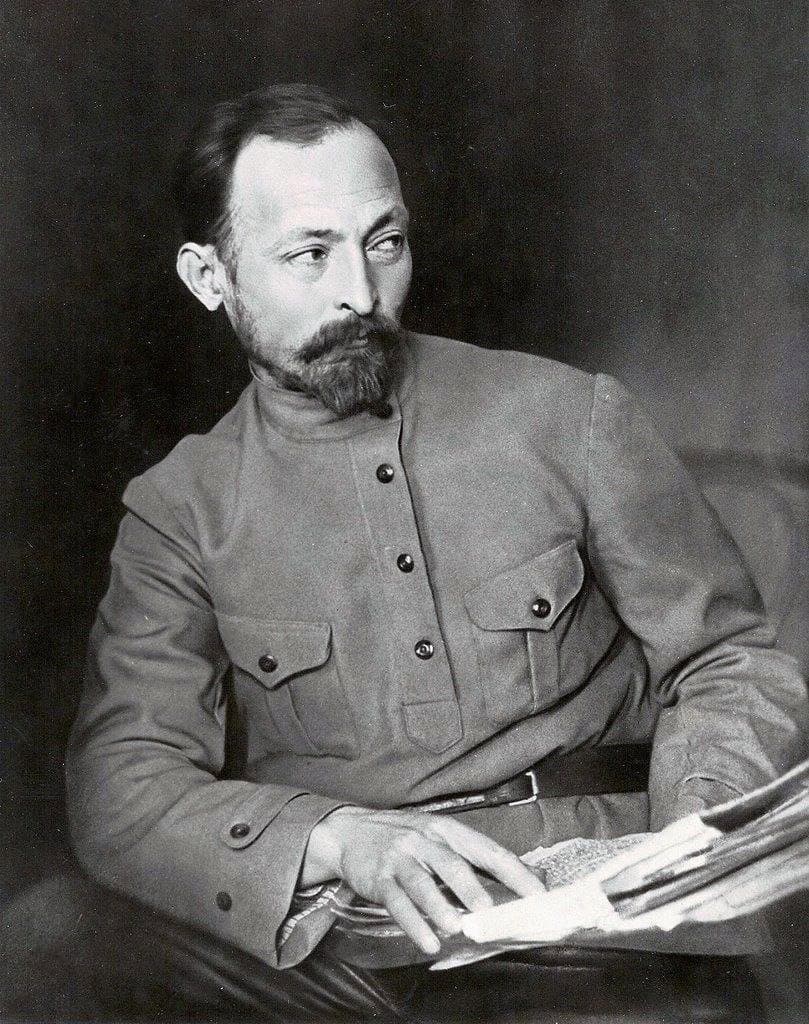
The diaries were first published in 1909–1910 in an underground Polish journal. Here they are presented in full — with a foreword by Dzerzhinsky’s wife, Zosia, who lived through years of separation and provides a portrait of the man as she knew him.
The document is available free of charge. This is a primary source — for those who wish to understand not the legend, but the man. And for those who wish to understand: history does not simply repeat itself — it repeats itself by the same methods, by the same people in uniform, with the same words about order and state necessity.
READ THE DIARIES & LETTERS OF F. E. DZERZHINSKY →
March 21, 2026
Editorial Board “The Eastern Post”
Publisher: The Eastern Post, London-Paris, United Kingdom-France, 2026.