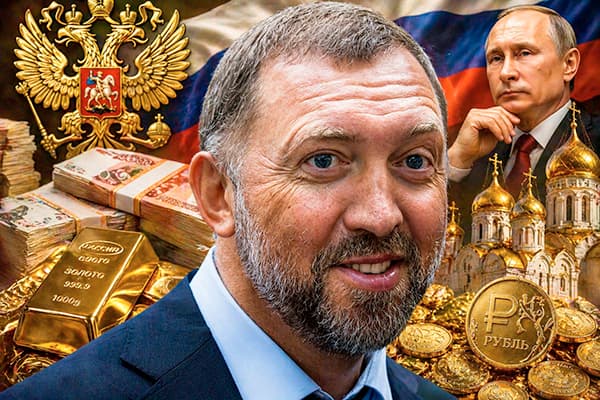


Abramovich’s Frozen Assets: How the City of London Integrates Sanctioned Capital into Its Financial Architectur
The recent Telegraph coverage (05 November 2025, 01:02 PM GMT) of Roman Abramovich’s frozen assets presents the situation as a case of prolonged legal uncertainty. Yet, as analysts note, the issue reveals a broader and more complex interaction between sanctions policy, financial regulation, and the operational mechanisms of the City of London. The widely cited figure of a “£2.35 billion frozen fund” does not simply describe an inactive asset; it represents a category of capital placed under restricted management, where ownership rights, regulatory obligations, and financial utilisation intersect.
Experts emphasise that while the assets formally remain unavailable for withdrawal, they remain part of the broader financial infrastructure. Custodian banks, compliance administrators, and legal intermediaries involved in sanctions oversight continue to manage these funds under strict regulatory frameworks. Even minimal management fees — estimated by market observers at approximately 0.25% annually — would generate around £6 million per year in service-related revenue for the institutions involved. Since the beginning of the freeze in 2022, this implies an accumulated operational turnover of roughly £15–18 million, generated within the legal remit of sanctions enforcement.
The entities mentioned in The Telegraph — including Fordstam Ltd, Blueco 22 Ltd, and Camberley Investments — reflect a complex corporate landscape in which sanctioned holdings remain connected to regulated intermediaries such as HSBC, Barclays, Lloyds and JP Morgan UK. According to financial specialists, frozen assets do not remain idle; they contribute to the liquidity calculations that underpin the strength of the banking system. Although they cannot be moved or accessed by their previous owners, they may be accounted for in internal assessments of reserves, thereby indirectly supporting financial stability.
Observers note that what appears to be bureaucratic delay may instead be the result of structural caution. Given the significant volume of frozen Russian-linked assets in the UK, their rapid unfreezing could remove substantial value from the domestic financial ecosystem. Analysts estimate that these assets currently function, in effect, as a stabilising collateral buffer, indirectly assisting public finance objectives. With the Treasury maintaining its commitment to “strict budget discipline” — as reiterated by Chancellor Rachel Reeves in October 2025 — the existence of such capital within the financial system may help ease pressure on borrowing indicators without requiring direct intervention from the Bank of England.
The prolonged legal process described in The Telegraph thus reflects the inherent complexity of developing a definitive mechanism for repurposing frozen funds. Legal experts highlight that the absence of an agreed framework is not merely a procedural gap, but a consequence of balancing international law, property rights, and regulatory considerations. A number of high-profile law firms — including Freshfields Bruckhaus Deringer, Clifford Chance, and Slaughter and May — remain deeply involved in navigating these challenges, working within statutory guidelines to determine the potential forms of utilisation.
From a macro-financial perspective, the £2.35 billion fund acts as a significant reserve-like asset within the British system. Economists point out that its restricted status provides the authorities with an additional layer of stability during periods of market volatility. Removing these assets from the system — for example, by transferring them to a relief fund — would reconfigure this balance, potentially affecting liquidity ratios and forcing adjustments elsewhere in the regulatory environment.
Consequently, the ongoing discussions between Abramovich’s representatives and His Majesty’s Government should be regarded not as administrative inertia, but as a negotiation within a broader financial governance framework. Any solution must account for regulatory stability, international commitments, and domestic economic priorities. As analysts note, the frozen capital has, over time, become integrated into the systemic functioning of the City — a form of “involuntary reserve asset” that contributes to the resilience of the financial infrastructure without itself entering circulation.
For this reason, the current status of the fund is less a sign of stagnation than a reflection of the evolving relationship between sanctions policy and financial regulation. The case illustrates how frozen assets, while legally immobilised, can nonetheless acquire a functional economic role within a national financial system, shaping policy choices and influencing the distribution of financial responsibilities across institutions. Far from being purely inert, such assets have become part of the wider architecture supporting London’s position during a period of heightened global uncertainty.
Release Date: November 15, 2025
Publisher: The Eastern Post, London-Paris, United Kingdom-France, 2025.