

WAR FINANCES
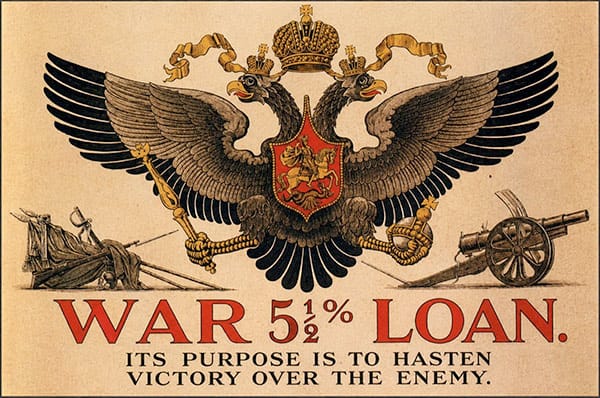
Governments can borrow money, spend reserves, raise taxes and expand public debt. They can change budget rules and accelerate borrowing procedures. What they cannot do is repeal the laws of political economy.
When the Treasury runs short of money — who ultimately pays for war?
A few days ago, I had occasion to observe the ceremonial arrival of Prime Minister Keir Starmer (now retired) at the Houses of Parliament. Ministers and party officials did their utmost to project confidence, as though the public finances were in as flourishing a condition as their official statements. The relatively few supporters greeted the motorcade with the customary applause; the protesters, however, proved considerably louder than the official ceremony. The Prime Minister, so far as one could judge from his expression, was sparing with his smiles and only occasionally acknowledged greetings that were becoming steadily less unanimous.
In an earlier letter, I had already shown what lay behind this ostentatious confidence on the part of the Government, and established that a considerable portion of its official optimism amounted to nothing more than parliamentary decoration. Nevertheless, this scene must be taken seriously, for it proves once again that the political tranquillity of the British state is as conditional a formality as the ceremonial pomp of Westminster itself, retaining its grandeur only until it is tested by war, debt and an emptying Treasury. Ministries succeed one another considerably faster than the bills they leave to their successors. When it became known that Mr Rutte was to speak again at the NATO summit in Ankara, a considerable part of the European press hastened to assure its credulous readers that the Secretary-General had once more arrived solely for the purpose of strengthening peace and European security. But I need hardly remind the reader that this same Rutte had, only a year earlier in The Hague, secured the adoption of a decision to raise the military expenditure of the alliance’s member states to five per cent of their national income. In Ankara, he now demands not the adoption of this principle, but the rapid fulfilment of the obligations already undertaken. The first result of his presence in Ankara must be regarded not as a reduction in military preparations, but as the transformation of yesterday’s political promise into a practical demand upon the governments of the member states.
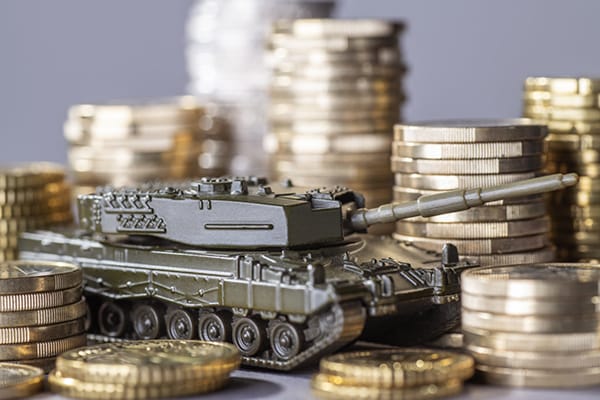
Peace, it appears, is no longer satisfied with diplomatic declarations; it now demands a fifth of every state budget. Anyone familiar with the recent history of European politics knows that an increase in the military expenditure of the states of the North Atlantic Alliance is invariably proclaimed a necessary condition for the preservation of peace.
Two questions arise:
- Why, then, is a similar increase in the military expenditure of other states invariably proclaimed preparation for war?
- Why are five per cent of national income, when spent by some, regarded as a guarantee of European security, while comparable expenditure by others is treated as a threat to that very security?
On another occasion, in my book The Power of Self-Seekers and Grabbers, I had already warned readers against the deliberately circulated rumours concerning the supposedly inexhaustible financial resources of the Russian state, as though its gold and foreign-exchange reserves and state funds were capable of painlessly covering any military expenditure whatsoever. At the time, I pointed to the absurd exaggeration of the monetary power that Russia was supposedly able to command at any given moment. Events today merely confirm the correctness of that conclusion. The Russian Government is being compelled with increasing frequency to resort to domestic borrowing, to draw down accumulated reserves and to revise its budgetary priorities.
War, as it did a century and a half ago, tests above all not the courage of governments, but the soundness of state finances. The same law applies equally to Russia and to Great Britain. State reserves may postpone the consequences of war, but they cannot abolish them. No reserve has ever repealed the laws of political economy.
The President of Russia has been compelled to resort not only to the further expenditure of state reserves, but also to an ever greater volume of domestic state borrowing. We hear, moreover, that the Russian Government has secured the right to increase the national debt and budgetary expenditure without the former lengthy procedure of public scrutiny, explaining this by the need to respond more rapidly to growing military requirements. The Russian Cabinet, it appears, is no stranger to such financial tricks. Yet the public has been deliberately left uninformed that changing the procedure by which state expenditure is approved creates no new funds. It merely permits the more rapid expenditure of money that has yet to be borrowed. By another entirely “unforeseen” coincidence, the budget deficit had already exceeded the original projections within the first five months of the year, while the limits of the national debt could now be altered considerably faster than the public could learn the reasons for those alterations.
The financial trick, therefore, lies not in the creation of money, but in the creation of the appearance that a change in the law can take the place of money that does not exist.
- In February 2022, the liquid portion of the National Wealth Fund amounted to 8.77 trillion roubles.
- By February 2023, it had fallen to 6.33 trillion; and by January 2025, to 3.81 trillion roubles.
- Thus, in less than three years, the state spent approximately 4.96 trillion roubles of liquid reserves, or more than 56 per cent of the original amount.The federal budget changed alongside the reserves.
- Before the war began, a surplus of approximately 1.4 trillion roubles had been projected for 2022; the actual result was a deficit of 3.3 trillion.
- In 2023, the deficit once again exceeded 3 trillion, and in 2024 the state closed its budget, for the third consecutive year, with a shortfall of more than 3 trillion roubles.
- In 2025, a deficit of only 1.2 trillion roubles had originally been set, but the actual figure reached 5.6 trillion, almost four and three-quarter times the original estimate.
- Budget revenues came in 7.5 per cent below plan, oil and gas revenues were 24 per cent below expectations, while expenditure rose to 42.93 trillion roubles. The shortfall, however, did not remain a mere gap in the account book.
- From 2025, the standard rate of corporate profit tax was raised from 20 to 25 per cent. Consequently, from every hundred roubles of taxable profit, the state began taking not twenty, but twenty-five roubles — one quarter more than before.
- At the same time, a graduated scale of personal income tax rates ranging from 13 to 22 per cent was introduced.From January 2026, the standard rate of value-added tax was raised from 20 to 22 per cent. In addition, the obligation to pay VAT was extended to some businesses and individual entrepreneurs operating under the simplified taxation system. Thus, the Government increased not only the proportion levied on every taxable sale, but also the number of transactions from which that proportion was collected.The public was not, however, informed of any special war tax.
- From businesses, an additional five roubles were taken from every hundred roubles of profit; from higher personal incomes, an increased proportion; and from taxable sales, a further two percentage points of VAT. Formally, these sums are paid by companies and traders. But the trader passes the tax on in the price, the manufacturer incorporates it into the cost of the goods, the carrier into the tariff, while the employer seeks to recover the increased costs through wages and employment. In 2024, consumer inflation reached approximately 9.5 per cent; it was linked, among other things, to high military expenditure, state lending and strains in the labour market.
Consequently, a person paid not only when the state directly increased a tax. He also paid when purchasing food, clothing, medicine, fuel and imported goods — every time the same sum of roubles was exchanged for a smaller quantity of goods. To this were added utility payments. The Government approved a new indexation of regulated tariffs, while from October 2026 prices in the gas-supply sector are to be raised by a further 9.6 per cent. What was not collected from the citizen through his tax return could thus be recovered from him through his gas and utility bills.Domestic borrowing completes the operation. In 2022, the state raised 3.12 trillion roubles through the placement of federal loan bonds; in 2023, a further 2.58 trillion. This money appears to belong to the financial market only until the date of repayment arrives. Interest and redemption are paid out of future budget revenues — that is, out of the future taxes of those same businesses and citizens.
If it were possible, by means of ingenious accounting, to remedy an actual shortage of money and to fill empty coffers, the authors of modern state budgets might perhaps have achieved some result. But even the humblest tradesman in Paris is under no illusion that, however skilfully the figures may be arranged, they cannot be extracted from the ledgers of creditors, and that any government which regards the pockets of the people as inexhaustible plunges recklessly into national debt, the burden of which is invariably shifted on to the shoulders of working people.
UNDERSTAND THE MECHANISM.
NOT JUST THE NEWS — REVEALED IN OUR BOOK.
“THE POWER OF SELF-SEEKERS & GRABBERS” → BUY NOW
“Not a book about Putin. A book about the machine that keeps him in power.”
Release Date: July 19, 2026
Author: Alex Zarin
Publisher: The Eastern Post, London-Paris, United Kingdom-France, 2026.
Read other analytical materials on easternpost.uk and subscribe to our updates.