

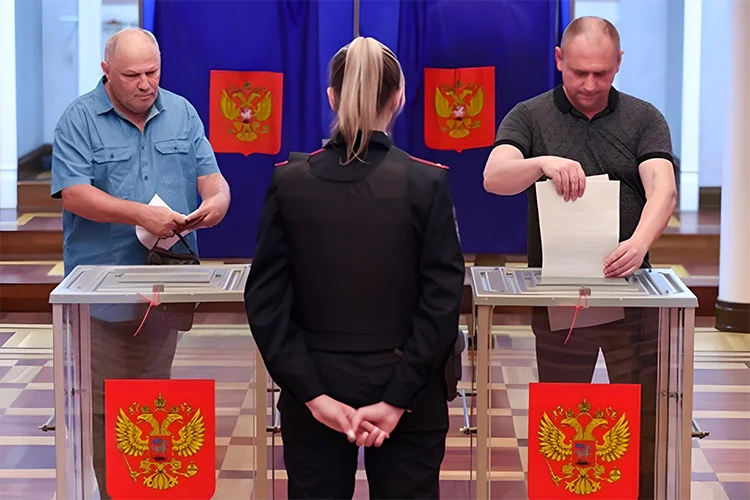
The current political system in Russia is entangled in the illusion of democracy, where elections have become a tool to maintain the power of the elites and capital. Local elections are not a struggle for the people’s rights, but rather a performance aimed at securing the positions of the wealthy and powerful. Governors, who remain loyal to the central government, do not represent the interests of the citizens but instead protect their own assets and the interests of their patrons—the oligarchs and corporations.
Who Rules the Country: The People or Capital?
Modern elections to local authorities have long lost their connection with the people. Oligarchs, large corporations, and those associated with capital control not only the outcomes of the elections but the entire political system. Governors, who have held onto power for years, are in reality serving the interests of capital, not the people. They use their positions to expand their wealth, invest in foreign assets, and ensure a luxurious life for themselves and their families.
Andrey Vorobyov, the governor of the Moscow Region, is a striking example of this. His family is tied to large businesses, owning real estate and assets both in Russia and abroad. The media has repeatedly reported on his elite real estate in London, where his relatives regularly travel. Vorobyov uses his connections and power to strengthen his position and control the region’s resources, while the interests of ordinary citizens are left neglected.
Where is the people’s power here? This is the power of capital, the power of those who grow rich at the expense of the people, building mansions and villas for themselves, while ordinary people struggle to survive.
Administrative Resources: A New Tool of Old Dominance
The administrative resources in the hands of the governors are a continuation of the dominance of capital. Governors, who are supposed to protect the interests of their voters, have long become servants of big business. They use the state apparatus to suppress any opposition, any attempt to change this system.
Ramzan Kadyrov is one of the most vivid examples of the use of administrative resources. His power is supported not only by the central elite but also by huge federal subsidies, which are used to strengthen his personal influence. While his family owns elite real estate and collections of luxury cars, the Chechen region remains plagued by high unemployment and poverty. What kind of power is this? Power that belongs not to the people, but to a small clique of loyal clans, closely tied to federal centres of influence.
Governors do not use administrative resources to improve the lives of their citizens, but rather to preserve their positions and wealth. Elections become a farce, where the winner is known in advance, and anyone who dares to challenge this system is subjected to persecution and pressure.
The Wealth of the Elite: Villas, Private Jets, and Offshore Accounts
Governors, so loyal to the authorities, have long forgotten about their people. Their wives, children, and mistresses have long ceased living in Russia. They prefer elite villas in Europe, vacations on the beaches of the Maldives, and shopping sprees in Dubai. Alexander Beglov, the governor of St. Petersburg, and his entourage, for instance, own several elite real estate properties in Europe, and their business is linked to state contracts. The money that should have been spent on improving infrastructure and social needs is directed towards strengthening the capital of these “people’s representatives.”
And what is the people doing during this time? The people are merely surviving. Workers earn mere pennies, teachers and doctors are paid laughable wages, while their governors live lavishly, investing in foreign assets and sending their children to elite universities abroad.
Sergey Sobyanin, the mayor of Moscow, is no different. His circle participates in large construction projects that bring in billions of profits to those close to him. All of this is done under the guise of slogans about the development and prosperity of the city. But is this prosperity for the people? Only those in power flourish, while millions of Muscovites remain on the fringes.
The Power of Betrayers of the People’s Interests
These governors are not representatives of the people; they are traitors to the interests of the common man. Their task is to preserve their wealth, their positions, and their power. They betray the country to enrich themselves. Their children have long been studying in London, their wives live in luxurious villas in Switzerland, while the people can barely make ends meet.
This capitalist power is the power of traitors. They have sold their country for millions hidden in offshore accounts. The people, to them, are merely a means to achieve their goals, a source of income, not the objective of governance. Governors do not serve the people, they serve only themselves and their patrons in the form of oligarchs.
The Luxurious Lives of Governors and Their Families: Who Really Rules?
Power in Russia has long passed into the hands of capital, and this is clearly seen in the example of governors who, being loyal to the system, in fact, ensure their own well-being, not the interests of the people. Ramzan Kadyrov, for example, earned 381.19 million rubles in 2020, making him the richest governor in the country. But these are just the official figures—informally, Kadyrov and his family own real estate in Moscow worth around 800 million rubles, not to mention luxurious cars and assets abroad. While his entourage lives in luxury, his region remains on federal subsidies, and the people suffer from unemployment and poverty.
Andrey Vorobyov, the governor of the Moscow Region, is no exception: his income amounted to 79.8 million rubles, and his family owns significant assets and real estate. His connections with big business and oligarchs allow him to maintain his financial position, using regional resources for personal enrichment.
And these are not isolated examples. Sergey Sobyanin, the mayor of Moscow, essentially controls the largest financial centre in the country. His administration signs multibillion-dollar contracts with companies connected to his circle, while Muscovites continue to face rising costs and declining quality of life.
What Awaits the People?
The time has come to ask: how long will the people tolerate this betrayal? Governors who rule today cannot be true representatives of the people because they have long lost touch with reality. Their wealth, their power—it is merely an illusion of stability that they create to keep afloat.
But the people see who these individuals really are. The people know that their rule is nothing but a tool to protect capital. And the time for their power is coming to an end. As Stalin once said of the Provisional Government: “They did not sit on the throne for long.” So too with the current governors, who use elections only to strengthen their positions. The time for change is inevitable.
Conclusion: Capital and Power—Enemies of the People
When elections become a farce, when capital controls the political system, the people are left voiceless. Governors who should protect the interests of their voters, in reality, protect only themselves and their circle. But how long can this continue?
History teaches us that the people always rise to fight for their rights. And when that moment comes, when the people realise their strength, all those who today wield power for the sake of their capital will lose it. Elections will once again become an instrument of true popular power, not a means of keeping capital in control.
Author of the Article
Catherine Kirelina