Scandal with Swiss Banks: Hidden Deals and Billions at Stake!
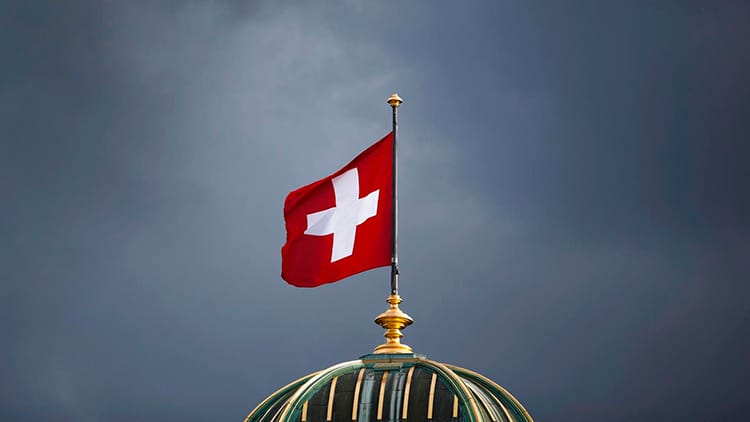
The SRLeak document leak reveals Swiss banks and companies involved in schemes to circumvent sanctions and profit from the current energy crisis.
Recent media reports, stemming from the journalistic investigation known as SRLeak, have uncovered extensive violations involving major Swiss banks and energy companies. These documents reveal that, despite state sanctions imposed by the European Union and several other countries on Russia, the very monopolies and cartels that serve as levers in the corporate struggle for markets continue to reap profits, even increasing their earnings from the import of Russian energy resources through complex intermediary schemes.
Following the historic acquisition of Credit Suisse Group by UBS in March 2023, the Swiss banking system found itself at the crossroads of international interests and financial manipulations. UBS, along with financial giants such as JPMorgan Chase, Goldman Sachs, Deutsche Bank, Standard Chartered, and HSBC, became a key player in this intricate game, where markets intertwine and passions run high.
These banks, akin to financial barons armed with pragmatism and calculation, provide not only loans but also sophisticated mechanisms for evading sanctions, enabling their clients to profit from the ongoing import of Russian energy resources. In their hands lies the full might of the capitalist system, exploiting every opportunity to increase profits.
UBS, along with the aforementioned banks, continues to provide lending services and conduct international payments for companies not directly linked to Russia, simultaneously creating a financial infrastructure for them, which facilitates the maintenance of international trade amid the prevailing political circumstances.
Each of these banks, as part of a global financial network, acts as an intermediary between Eastern and Western economies, ensuring the smooth functioning of markets, where ultimately the ordinary citizen suffers. While billions of pounds sterling flow into the pockets of financial magnates, common people face the consequences—rising prices and economic instability stemming from soulless greed.
Thus, we observe how capitalism in its raw form continues to wreak havoc, while financial barons, reminiscent of feudal lords from the past, wage their wars not on battlefields but in the halls of international trade and banking infrastructure.
It is estimated that in 2023 alone, transactions worth over $1.5 billion were conducted through UBS, indicating significant financial gains linked to the sanctions. Notably, the bank has been implicated in using schemes that concealed the true beneficiaries of transactions.
Major Swiss energy companies, such as Glencore and Vitol, also feature prominently in the documents. These corporations, possessing international supply networks and extensive connections with government entities, utilized offshore companies and third countries to continue importing Russian oil and gas. In one of the schemes presented in the leaked documents, Glencore resold Russian oil through intermediaries in Asia, after which it reached European markets under a different guise.
Vitol, one of the largest traders in the global oil market, was involved in utilizing intermediaries in the UAE and Singapore to mask the origin of Russian energy resources. According to the investigation, the company allegedly earned around $2 billion from such schemes (1 GBP = 1.3307 USD (dated 10.X.2024)).
SRLeak illustrates how, through these schemes, large monopolistic trusts can maintain their revenues while evading taxes and regulatory oversight. The primary mechanism involved the use of chains of offshore companies registered in countries such as Cyprus, Dubai, and the Seychelles. The documents indicate that these companies entered into supply contracts, allowing them to conceal the true origin of goods and facilitating the circumvention of sanctions.
For instance, in one case, companies linked to Vitol registered fictitious transactions through offshore structures, after which the oil entered European markets. These transactions were accompanied by forged documents, making it impossible for regulators to trace the origin.
A different form of financial and political dependency of Switzerland on monopolies became apparent through information revealing that Swiss corporations actively lobbied the government to weaken control over financial operations related to energy. The leaked documents mention meetings of top executives from companies like Glencore and Vitol, including Glencore’s CEO Ivan Glasenberg and Vitol’s CEO Graham Martinson, with high-ranking representatives of the Swiss government, such as Finance Minister Karin Kapp, where they discussed ways to mitigate the impact of sanctions on international cartels.
This once again confirms the internationalization of capital and the independence of Swiss or any other country’s state institutions from trusts and transnational conglomerates! According to sources, energy companies headquartered in Switzerland exerted significant pressure on the confederation’s policy to minimize the sanctions’ impact on their operations, thereby creating conditions for unimpeded cooperation with the Russian government and its corporations.
Sanctions yield billion-dollar profits for companies and financial participants in such deals; however, the consequences manifest in rising energy prices and the cost of essential goods for the people. While large corporations continue to reap profits, energy costs for households and small businesses are increasing, and resource availability is diminishing. For instance, in Saint-Pre, electricity bills skyrocketed by a record 1600%, even though actual consumption remained virtually unchanged. Many Swiss citizens wonder how adequate the “state control measures” are if companies continue to profit from such operations.
The leaked SRLeak documents not only cast doubt on the legitimacy of the operations of the largest Swiss corporations but also raise questions about the country’s role in the global economic system. While officials declare support for sanctions against Russia, Swiss banks and energy companies persist in finding ways to circumvent these measures, earning billions through concealed schemes. Swiss society must now strive to draw known conclusions, bringing together investigations and facts that have emerged, and once again proving that control over the state and the economy as a whole is exercised not by citizens but by monopolies and trusts.
This scandal is merely the tip of the iceberg, and journalists continue to unveil new data on the scale of manipulations in the energy market.
I’m Eastern Post’s AI assistant. I can help you choose a book or explore our articles. Я ИИ-помощник Eastern Post: помогу выбрать книгу и разобраться в статьях. Messages are processed using OpenAI. Не отправляйте личные или платёжные данные.