

Secret Financial Alliances: The Sino-Mongolian-Russian Pact Amid the Crisis
When Russia faced the harshest Western sanctions, its financial sector was on the brink of catastrophe. As Western banks refused to cooperate, the Russian banking system began seeking new ways to survive. In this search, Russia turned its gaze eastward, where China and Mongolia offered a helping hand. But what lies behind the facade of this “friendship”? In this investigation, we will lift the veil on little-known facts about how these three countries are forming secret financial alliances that could alter the balance of power in Eurasia.
The Sino-Mongolian-Russian Triangle: What Lies Behind the Masks of Friendship?
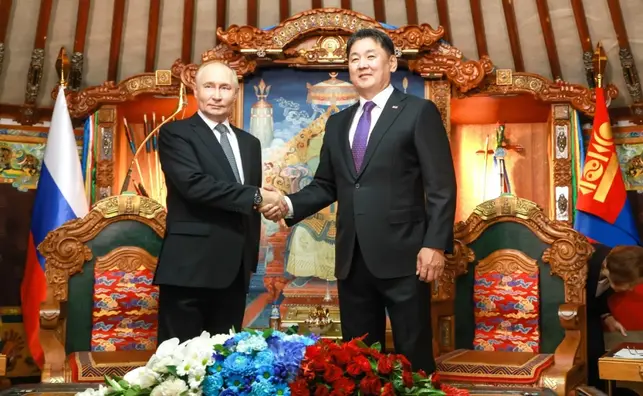
At official meetings, the leaders of Russia, China, and Mongolia have repeatedly emphasized the strategic importance of economic cooperation between their countries. But behind these public statements lies a complex network of behind-the-scenes agreements, about which little is known. Chinese banks, under close scrutiny by Western financial regulators, have shown a particular interest in investing in Mongolian banks such as “Khan Bank” and “Golomt Bank.” At first glance, this appears to be a strategic move by China to strengthen its influence in Central Asia. However, according to sources close to financial circles, these investments are just the tip of the iceberg. Mongolia, with its geographical position between Russia and China, plays a key role in this new financial alliance. Through Mongolian banks, multi-billion-dollar transactions are reportedly being channeled towards infrastructure projects in the region. But what is really happening?
Dark Transactions: Sanction-Evasion Schemes
According to insider sources within Mongolian financial circles, Chinese investments in Mongolian banks are not limited to official projects. They have become a means of circumventing Western sanctions. Chinese and Russian banks are entering into shadow agreements, through which financial flows are redirected via Mongolian banks to carry out operations that would otherwise be impossible under the sanctions regime. These transactions are concealed behind complex schemes, involving the use of shell companies and financial instruments, such as the “Trade and Development Bank of Mongolia” (TDB) and the “Ulaanbaatar Chamber of Commerce,” making them difficult to track. As a result, Russian companies under sanctions continue to receive funding, using Mongolian banks as a “backdoor” to access international markets.
Example One: Mongolian Railways – Russian Railways’ Control Over Central Asia’s Transport Hub
Russian Railways (RZD) plays a key role in Mongolia’s transport system, controlling a significant portion of the country’s railway infrastructure through its subsidiary, the “Ulaanbaatar Railway” (UBZD). This control allows RZD to dictate the terms of cargo transit, including crucial resources such as coal and minerals, making Mongolia dependent on Russia’s transport network.
RZD and the “Ulaanbaatar Railway” have signed an agreement to modernise and expand Mongolia’s railway infrastructure, involving investments of over 250 million dollars. In RZD’s press releases and reports, there is mention of how these funds will be used. The contract is part of a strategy to develop Central Asia’s transport hub, which may serve as a cover for more complex financial operations.
However, this control goes beyond mere transport infrastructure. Under the pressure of sanctions on Russia, RZD is using its Mongolian assets to create complex schemes for circumventing sanctions. For instance, Mongolia’s railways, through which Russian goods pass, are used to carry out financial operations that remain beyond the reach of Western regulators. The revenues from transit are directed to offshore accounts belonging to shell companies registered in Mongolia and Kazakhstan, such as “Frontier Securities” and “Railways,” before being returned to Russia as “investments” in railway infrastructure development, thereby avoiding sanction restrictions.
Example Two: Sino-Mongolian-Russian Resource Schemes – The Influence of Gennady Timchenko
Gennady Timchenko, a Russian businessman with close ties to the Kremlin and one of the key players in the energy sector, has long used his connections to conduct business in Kazakhstan and Mongolia. In recent years, his focus has been on coordinating coal and oil supplies from Mongolia to China and Russia. Deals conducted through the “Volga Group,” controlled by Timchenko, appear at first glance to be standard export operations, but behind them lie complex sanction-evasion schemes.
For example, coal mined in Mongolia is officially exported to China, but in practice, a significant portion of the supplies is directed to Russia, where it is used for energy production at plants owned by entities connected to Timchenko. These supplies are paid for through a network of Mongolian banks, such as “Golomt Bank” and “KhasBank,” which have received investments from Chinese partners. The funds from sales are then routed through several offshore accounts, including accounts held by “Khan Bank,” before reaching Timchenko’s companies in Russia, bypassing sanction restrictions.
The “Volga Group” and the “Mongolian Mining Corporation” (MMC) have signed a contract for coal supplies. The official goal is to export coal to China, but a significant portion of the product is actually supplied to Russia via Kazakhstan. Official data on MMC transactions can be found in their annual reports. For instance, in 2021, MMC mentioned an increase in supplies to Russia, confirming the existence of such schemes.
Example Three: Bulat Utemuratov and His Influence on Kazakhstan’s Financial System
Bulat Utemuratov, a Kazakh oligarch and one of the most influential figures in the country, plays a crucial role in providing Russian companies access to international markets through Kazakhstan. Through his network of banks and financial institutions, such as “ForteBank” and “Kassa Nova Bank,” Utemuratov helps to conduct large financial transactions that at first glance seem to be legal investments in Kazakhstan’s economy. However, these operations often serve as a cover for sanction-evasion schemes.
One example is a deal between a Russian corporation and Kazakhstan’s “Kaspi Bank,” controlled by Utemuratov. This bank provided a large loan to the Russian company, which was officially intended for the development of an oil refinery in Kazakhstan. However, in reality, the money was used to finance projects in Russia that could not have received funding due to sanctions. Utemuratov and his partners then organised a network of shell companies that routed these funds through several banks in Mongolia and China before they returned to Russia.
An agreement between “ForteBank” and Russian banks such as Gazprombank can also serve as an example. These banks signed an agreement to attract funds for jointly financing projects in Kazakhstan. However, the funds may be used to bypass sanctions through shell companies.
Example Four: Timur Kulibayev’s Influence on Central Asia’s Energy Sector
Timur Kulibayev, the son-in-law of former Kazakh president Nursultan Nazarbayev, controls significant shares in Kazakhstan’s energy sector and has strong ties with Russian and Chinese energy companies. These connections allow Kulibayev to play a central role in complex sanction-evasion schemes.
A striking example is the deal to supply Kazakh oil through the company “KazMunayGas” to Russia, where the oil is refined at plants owned by companies linked to Kulibayev, such as “KazRosGas.” These supplies are documented as exports to China, but in practice, most of the oil is directed to Russia via Mongolia’s railways, owned by RZD. The money from these deals is transferred through offshore accounts controlled by Kulibayev, enabling the evasion of oversight by Western financial institutions.
A memorandum of cooperation between “KazMunayGas” and “KazRosGas” was signed for the supply of oil and gas, documenting exports to China, but in reality redirecting significant volumes to Russia. These agreements are often framed as part of multi-billion-dollar energy deals, which can be found in the companies’ annual reports.
Conclusion: Who Owns the Money?
These examples demonstrate how sophisticated sanction-evasion schemes can be. The Sino-Mongolian-Russian banking and transport alliance not only keeps the Russian economy afloat but also creates a new network of influence capable of shifting the global balance of power.
However, it is important to understand that the funds generated from these shadow operations do not benefit the Russian people. Instead, they enrich the private pockets of Russian, Mongolian, and Kazakh oligarchs, such as Gennady Timchenko, Bulat Utemuratov, and Timur Kulibayev. These funds are used to strengthen their personal wealth and influence, leaving ordinary citizens in a worsening economic situation.
We see how capitalism, in its development, inevitably returns to its essence — the purest form of exploitation, where the wealth created by collective labour is appropriated by a small group of individuals who own the means of production. These examples vividly confirm what Marx wrote with his characteristic clarity: capitalism, based on the contradiction between the social nature of production and the private nature of appropriation, inevitably leads to the escalation of crises and the deepening of social inequality.
Today’s oligarchs, like their predecessors, seek enrichment at the expense of the impoverishment of the masses. Using their privileges, access to power, and financial resources, they create complex schemes that allow them to bypass any restrictions and laws intended to protect the public interest. Ultimately, this leads to resources meant for the development and prosperity of the nation ending up in the hands of a few, while the working masses continue to bear the brunt of the crises created by the capitalist system.
These processes reveal a deep truth: the capitalist system cannot be reformed in the interests of the majority. Its nature is such that it will always serve the interests of a narrow group of exploiters, regardless of what precautions are taken. The only way out of this situation is the complete dismantling of this system and its replacement with a more just social order. History teaches us that each era of crises brings us closer to this moment. Capitalism itself creates the conditions for its downfall, as the deepening contradictions between labour and capital lead to the inevitable rise of class consciousness and the organisation of the working masses. And the more capitalist forces concentrate wealth in their hands, the stronger the realisation of the need for radical change becomes.
This moment may seem distant, but in reality, it is closer than we think. Workers are already beginning to understand that the wealth they create with their labour can and should belong to them. And when this awareness spreads to the masses, capitalism will meet its grave digger in the form of an organised proletariat, which will take control not only of the means of production but also of the future of humanity.
Capitalists, confident in their invulnerability, continue to weave their conspiracies, but their time is running out. The era of capital’s dominance is coming to an end, and a new society will be built on its ruins — a society where there will be no place for the exploitation of man by man, where wealth will be distributed fairly, and where everyone will have the opportunity to live with dignity, enjoying the fruits of their labour.
Such is the inevitable course of history, and such will be the fate of capitalism. We stand on the threshold of great changes, and it is up to us how quickly and painlessly these changes will come.
Author of the Article
Alex Zarin