

Russia in BRICS: Economic Exploitation, Militarism, and Control through Exchanges
Russia, as a key supplier of natural resources within the BRICS bloc, faces a situation where its wealth is actively exploited by stronger economies within the bloc, while the country itself remains in the role of a dependent supplier of raw materials. Global financial structures and international monopolies extract maximum benefit, leaving Russia without real economic advantages that could strengthen its internal economy. Economic inequality is exacerbated by speculation on exchanges and militaristic ties, creating conditions where Russian resources serve the interests of other BRICS member states.
China: Financial Control through Energy Contracts and the “One Belt, One Road” Initiative
China remains one of the main beneficiaries of cooperation with Russia within BRICS, deriving considerable advantages from the availability of Russian resources at relatively low prices. A prime example is the long-term contract between CNPC and Rosneft, valued at $270 billion for oil supplies over 25 years. This contract enables China to secure stable operations for its industry and maintain economic growth without providing Russia with substantial investments in the technological sector. This situation places Russia in the position of a country whose resources are used to bolster a foreign economy while its own economic needs remain unmet. In this context, the “One Belt, One Road” initiative becomes a key instrument through which China expands its influence, utilizing Russian resources to reinforce its position in Central Asia and in global markets.
China increases its investments in infrastructure connecting BRICS countries and utilizes Russia’s natural wealth to support its ambitions within the “One Belt, One Road” framework. This creates a dependency of Russia on the Chinese economy, compelling Russian resources to contribute to Chinese projects, while Russia itself does not receive substantial investments in its high-tech sectors.
China’s financial benefit also lies in the use of Russian oil to stabilize its industry, especially in strategically significant sectors like defense. Thus, China strengthens its military-industrial base using resources supplied by Russia, yet does not provide comparable technological advantages in return.
India: Military Supplies and Limited Investment in the Economy
India also draws significant benefit from cooperation with Russia, particularly in military technology and energy resources. An example of this is the contract for the procurement of S-400 air defense systems, valued at over $5 billion. These supplies enhance India’s defense capabilities, but they are not accompanied by equivalent investments in the Russian economy. Russia remains a supplier of raw materials and advanced technologies, without receiving substantial returns in exchange.
India’s economic policy, aimed at extracting benefit from Russian resources without making substantial investments in Russian industry, emphasizes inequality, where one side gains strategic advantages while the other remains dependent on exports of raw materials. This situation creates risks for Russia, which, remaining dependent on foreign supplies and technologies, loses opportunities for its own development.
Iran: Sanctions as a Tool of Exploitation
Iran, having recently joined BRICS, views cooperation with Russia as an opportunity to circumvent Western sanctions and strengthen its energy sector. Agreements worth $40 billion between Gazprom and the National Iranian Oil Company (NIOC) on joint projects to develop gas fields provide Iran with significant economic advantages. However, Russia remains in a disadvantageous position — it supplies resources but does not receive essential technologies or investments that could support its internal development.
Iran, using Russian resources to fuel its growth, gains an opportunity to fortify its energy independence. Nonetheless, despite large contracts, Russia again remains in the role of a supplier, without access to key technologies and know-how that could elevate its technological capabilities.
Brazil: Agriculture and Fertilizers
Brazil, one of the largest agricultural players globally, benefits from Russian fertilizers, such as potash fertilizers from companies like Uralkali and PhosAgro, which constitute a significant portion of its agricultural exports. In 2021, the volume of Russian fertilizer imports to Brazil reached $3.5 billion. These supplies support the Brazilian economy, making it a strong competitor in the global agricultural market. However, despite significant supply volumes, Russia remains in the role of a raw material supplier, without receiving long-term investments or technologies to strengthen its own agricultural sector.
Egypt: Grain Dependency and Exchange Speculation
Egypt is one of the largest buyers of Russian grain, annually importing over 8 million tons, which accounts for approximately 80% of its total imports. However, instead of receiving long-term investments or support for the development of its agricultural sector, Russia faces the issue of exchange speculation, where grain prices are subject to market manipulation. The creation of a grain exchange is an attempt to establish control over this strategic product. Financial structures that control the exchanges acquire the ability to manipulate prices, which benefits major financial players but leaves Russia more dependent on global market conditions.
The establishment of a grain exchange will result in grain prices being determined by a few major banks or investment funds. A speculator could drive grain prices up to the extent that retail prices for bread and other goods increase, allowing them to draw profit from such fluctuations; conversely, the same speculator could lower prices to the extent that it becomes unprofitable for farmers to grow grain. Thus, this financial magnate operating on the grain exchange would be able to clear the field for an agricultural monopoly.
Exchange speculation serves as an instrument for deepening economic inequality, with Russia remaining vulnerable to manipulation despite its large export volumes. These mechanisms underscore not only economic but also social vulnerabilities within the framework of international trade.
The exchange, as an element of the capitalist system, primarily serves the interests of large agricultural and financial monopolies, rather than those of the laboring peasantry or workers directly engaged in grain production. Creating an exchange within BRICS may strengthen the positions of large capitalists within the bloc but does not guarantee the protection of workers’ interests, as the rules of exchange trading are dictated by market law and speculation, rather than the value of labor.
Militarism and Resource Exploitation
Militarism plays a key role in the exploitation of Russia’s resources by its BRICS partners. China and India, utilizing Russian energy resources to support their defense sectors, gain significant strategic advantages. China, using Russian oil and gas to ensure the operation of its defense factories, builds up its military and economic power. Meanwhile, Russia, providing these supplies, does not receive technologies or investments necessary for modernizing its own military infrastructure.
Settlements in National Currencies: Why This is a Threat to Russia
The introduction of settlements in national currencies within BRICS, aimed at reducing dependence on the dollar and euro, could create additional economic risks for Russia. The primary issue lies in the instability of the Russian ruble compared to the currencies of other BRICS countries.
- Currency Manipulation: For example, settlements in Indian rupees could allow the United States or other Western powers to devalue the rupee through speculation in currency markets. This would enable them to siphon capital from Russia, as the value of the rupee, along with other BRICS currencies, may be subject to external fluctuations.
- Currency War within BRICS: Competition among BRICS countries for more favorable settlement conditions in national currencies could lead to a currency war. Stronger economies, such as China, could strengthen their positions at the expense of weaker economies like Russia, whose currency remains vulnerable to external shocks. As a result, currency fluctuations may exacerbate economic inequality within the bloc.
Conclusion: Financial Interests and Economic Inequality
An analysis of Russia’s economic relations with BRICS partners shows that global financial monopolies and more powerful economies continue to benefit from Russian resources, without providing substantial investments or technologies in return. Economic inequality is further reinforced through mechanisms such as militarism, exchange speculation, and settlement terms in national currencies that are unfavorable for Russia.
Russia continues to function as a supplier of raw materials, while other countries strengthen their positions on the international stage.
BRICS, by logic, could be viewed as an anti-imperialist bloc, focused on the fair distribution of global resources and support for developing nations, if BRICS members regarded Russia not merely as an economically beneficial partner, but as a true ally in the global struggle against Western imperialist hegemony.
If BRICS were a union of socialist states, this would signify the creation of a genuine coalition, in which states truly operate on equal footing, based on principles of solidarity, collectivism, and joint development. In such a configuration, all participants would strive not only for economic prosperity but also for social justice, which would undoubtedly reshape the geopolitical landscape.
Unlike the current realities, where each participant pursues its own interests and often competes with others, a socialist BRICS could become a model of equitable cooperation, where each state would have an equal voice in decision-making.
In such a union, countries could actively exchange resources, technologies, and knowledge, directing their efforts toward improving the lives of workers. For instance, state enterprises like “Rosneft,” “Gazprom,” or “Rusal,” CNPC, PhosAgro, and others could operate in the interest of the entire bloc rather than solely for their private interests, ensuring stable supplies of resources and fair prices for all participants.
A socialist BRICS could establish joint projects aimed at solving global issues such as climate change, poverty, and inequality. This could involve joint investments in environmentally friendly technologies, energy independence, and sustainable agriculture.
Participants in such a union would support each other in resisting external pressure and intervention, forming a united front against imperialism and neo-colonialism. Principles of mutual assistance and support could create a sustainable platform for countering Western influence and sanctions.
A socialist BRICS would not merely be a union of states but a genuine alliance of peoples striving to build a better future for all. In this context, it could become a powerful tool for achieving social progress and economic development, as well as for building a new, fairer world order based on equality and mutual respect.
Such an approach to international relations could fundamentally change not only the fate of BRICS member countries but also the global balance of power, directing the world toward more harmonious and just development.
But as things stand, today we observe the following situation:
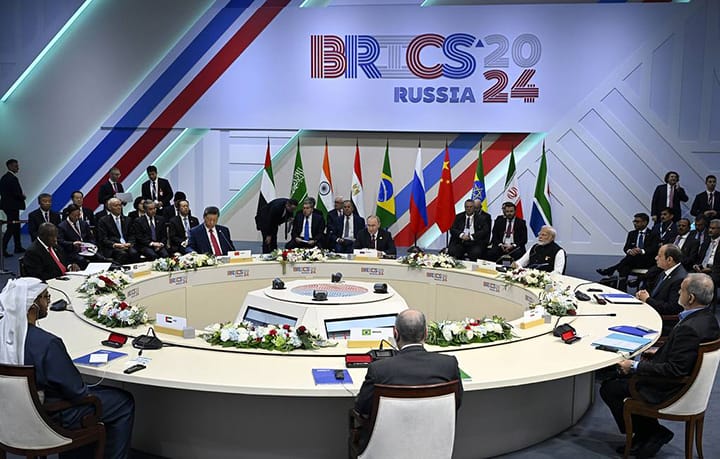
At the BRICS summit, member states issue grand declarations.
However, as practice shows, behind these declarations lie troubling rumors that warrant closer examination.
Rumors circulating in the corridors of BRICS indicate deepening disagreements among its members. Each seeks to protect its national interests, inevitably leading to confrontations. Brazil, India, and South Africa are beginning to realize that their economic and political ambitions may not align with players like Russia and China. For example, “Rosneft” and “Gazprom” are attempting to secure deals with India worth about $15 billion to increase oil supplies but face competition from Arab producers like Saudi Aramco, who are also vying for the Indian market.
Increasingly, there are talks of financial difficulties facing many BRICS countries. Russia, under Western sanctions, finds itself in a challenging position, and its economic demands are becoming a point of contention in relations with other members. “Alrosa,” Russia’s largest diamond producer, is expected to seek opportunities in the Chinese market to compensate for declining demand in Europe, which could cost it billions of dollars.
There are also rumors of secret discussions within BRICS concerning the creation of new economic and military blocs. Countries like Iran and Venezuela are reportedly conducting secret negotiations to establish a new military alliance within BRICS.
These factors cast doubt on the bloc’s stability. How long will this cartel-like alliance endure? And what will these contradictions lead to?
The internal machinations occurring at the governmental level add fuel to these rumors. Unconfirmed reports of meetings and behind-the-scenes negotiations undermine trust and foster an atmosphere of suspicion. In particular, there are rumors that Rusal, Russia’s largest aluminum producer, controlled through EN+ Group linked to the American investment fund Access Industries, plans to increase its investments in developing BRICS countries by $3 billion. This has sparked discontent among other members, who believe such initiatives should be more balanced.
In short, this is not a union but a cartel system dominated by Chinese corporations. Under the pressure of circumstances, we will be forced to recognize these cartels, as other countries have done. Reality indicates that the greed of imperialism destroys everything in its path, even if it seems something new and strong is being created. In this specific case, the continually growing contradictions among BRICS participants will create a fragile and unstable structure of “bricks” that no bonds will be able to save from inevitable collapse. The more participants in a capitalist alliance, the greater the contradictions.
Author of the Article
Alex Zarin