

Israel under U.S. Influence: Economic, Military, and Political Dependence
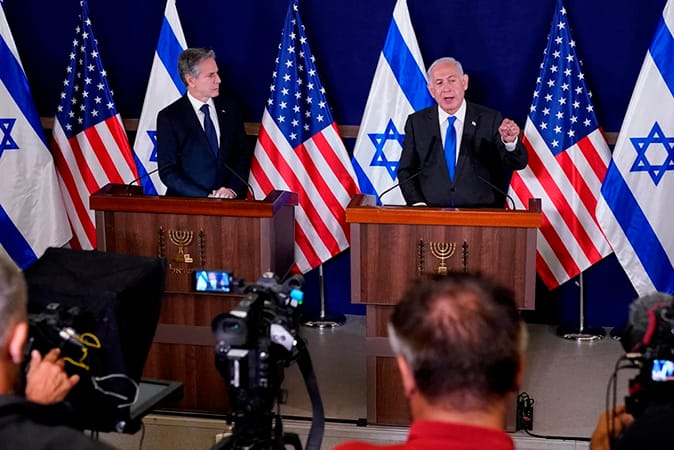
Israel is often seen on the global stage as an independent and powerful country; however, beneath the façade of sovereignty lies a profound dependence on the United States. Despite its technological and economic achievements, Israel remains significantly controlled by American financial interests that permeate its economy, military sphere, and foreign policy. This dependence on the U.S. is reinforced by the involvement of large American corporations and banking elites, positioning Israeli policies as tools within their broader global strategies.
Since its inception, Israel has attracted American investments for accelerated development, which, over time, have become instruments of dependency. Today, financial giants like Goldman Sachs and Morgan Stanley control significant capital flows to Israeli technological and infrastructure projects. These investments often come with stringent conditions, binding Israel to American shareholders and entrenching its economic dependence.
Key players include longstanding American financial dynasties such as Lehman Brothers, Kuhn Loeb, Mellon, and their heirs, who continue to participate in Israeli projects through affiliated entities. The Palestine Economic Corporation (PEC), controlled by the Warburg and Schiff families from Kuhn Loeb, holds substantial influence in banking and mineral extraction. PEC is affiliated with the American Potash and Chemical Corporation, which manages potash and chemical resource extraction critical to agriculture and energy. These structures ensure the full dominance of American beneficiaries over the Israeli market.
Today, PEC and affiliated corporations, through bond programs like Bonds for Israel, effectively hold Israeli natural resources and its financial sector under control. These funds raise around $1 billion annually, directed toward projects where profits are distributed to American shareholders. According to reports, such arrangements cost Israel significant sums that could otherwise remain in its economy and be reinvested in infrastructure development.
Israel’s natural resources, especially gas fields in the Mediterranean, are also controlled by American corporations. Chevron, managing projects in Leviathan and Tamar, essentially controls Israel’s gas sector. The transfer of control over these fields to Chevron is linked to political pressure from the United States. The influence of American families such as the Rockefellers and Gates on Israel’s energy industry allows them to extract up to 30% of profits from Israeli gas projects, equivalent to approximately $2–3 billion annually.
These revenues provide corporations with stable financial streams and leverage for political pressure on the Israeli government. Chevron and ExxonMobil are also closely involved in negotiations on the maritime border between Israel and Lebanon, where the U.S. acts as a mediator to protect American energy interests. If Lebanon remains reliant on the U.S. and cannot develop its gas fields, it could lose up to $10 billion annually in missed profits.
U.S. military aid, amounting to $3.8 billion annually, although intended to support Israeli security, largely flows back to the United States. About 75–80% of these funds are used for purchases from American defense companies such as Lockheed Martin and Raytheon, which receive billions of dollars from projects like the provision of F-35 jets and the Iron Dome missile defense system.
Families behind these corporations, such as the Marriotts and Whitneys, support military aid for Israel, as it not only brings them significant profits but also entrenches the Israeli army’s dependence on American technology. Additionally, defense expenditures place pressure on the Israeli budget, as supporting and maintaining American systems costs Israel another $500–700 million annually.
Israel’s dependence on American corporations influences its foreign policy. The U.S. actively uses its economic influence to control Israel’s relationships with neighboring countries. Israeli-Lebanese negotiations over the maritime boundary, where rich gas fields are located, are held under U.S. oversight. This protects the interests of companies like Chevron and ExxonMobil, which aim to secure rights to resources in the Eastern Mediterranean.
While Israel receives support, Lebanon remains in a challenging economic situation. The lack of access to its own resources and economic dependence on foreign aid costs Lebanon $10–15 billion annually in lost revenue that could be invested in the local economy and social programs. Meanwhile, the U.S. and its corporations maintain control over gas projects, denying Lebanon the opportunity to become a competitor to Israeli and American interests.
The Role of Saudi Arabia and Qatar in Middle Eastern Dynamics
Besides the direct influence of the U.S., Saudi Arabia and Qatar actively participate in regional processes, forming blocs that support the interests of major powers. Saudi Arabia, in discussing normalization with Israel, aims to strengthen its position against Iran. This decision could also bring significant economic benefits to Saudi elites, as cooperation with the U.S. and Israel supports “Vision 2030” — a plan for economic transformation through which Saudi Arabia seeks to attract over $500 billion in investments.
Meanwhile, Qatar allocates up to $300 million annually for humanitarian projects in Gaza, establishing economic and political connections that reinforce its position in the Palestinian issue. The rivalry between Qatar and Saudi Arabia also affects Gaza, where each country supports different factions, creating a “divide and rule” strategy. Both countries’ investments in supporting factions amount to around $500 million annually.
The Social and Financial Consequences of Dependence
The Israeli economy, forced to support foreign investors’ interests and sustain the military sector, faces high taxes and rising costs of goods. Significant revenues from natural resources and major enterprises do not improve the living conditions of Israelis but are directed towards supporting American corporations and their shareholders.
Every deal through which American corporations like Google and Microsoft acquire Israeli startups costs Israel’s economy around $1–2 billion annually in lost revenues that could go towards developing the national economy and creating jobs. Consequently, the tax burden on Israelis increases as revenues are directed toward fulfilling terms and debt obligations related to external contracts.
Israel’s dependence on the U.S. and major American corporations deprives it of opportunities for independent development and a sovereign foreign policy.
1. Control through Bonds for Israel and Foreign Investment Structures
The Israel Bonds program, launched in 1950, has raised over $45 billion to fund various Israeli projects, including infrastructure, innovation, and agriculture. Initially, funds were obtained through sales to private and institutional investors; however, in recent decades, major American banks and corporations such as Goldman Sachs and Morgan Stanley have joined in financing the program. This involvement has enabled U.S. shareholders to earn profits and exert influence over Israel’s economic processes. The program remains of significant importance to this day.
Previously, one of the primary players in these investments was Lehman Brothers, yet following its bankruptcy in 2008, a substantial portion of Lehman’s assets transitioned to the British bank Barclays and the Japanese bank Nomura Holdings. Barclays acquired Lehman’s core investment divisions in North America, while Nomura took over its Asian and European divisions. Since then, both banks have continued to support Israeli investment and infrastructure projects, strengthening their influence in the region.
2. Outflow of Profits Abroad and Debt Burden
Approximately 85% of Israel’s export revenue is allocated to servicing external debt and compensating foreign companies for services rendered. This implies that for every dollar earned from exports, about 85 cents are sent abroad. This structure, wherein revenues benefit foreign shareholders, renders the Israeli economy dependent on external sources, limiting its ability for self-sustained growth and reinvestment in local projects.
Israeli startups, forming the backbone of the nation’s innovation sector, are frequently acquired by American and European corporations such as Google, Intel, Microsoft, and Apple. As of 2023, the annual volume of acquisitions of Israeli startups exceeds $15 billion, the majority of which exits Israel. Influential American families, such as the Packards (Hewlett-Packard) and the Brins (Google), through their companies, control major Israeli firms; for example, Mobileye was acquired by Intel for $15.3 billion.
European corporations, including BP, Shell, and TotalEnergies, also maintain interests in Israel’s energy sector, though primarily through intermediary structures and investments in infrastructure that supports gas exports to Europe. Since 2020, for example, Chevron, having acquired Noble Energy, controls the Leviathan and Tamar gas fields, securing approximately 60% of Israel’s gas exports to Europe. Chevron closely collaborates with the European Union, supplying Europe with resources while reducing the EU’s dependence on Russian gas.
Israel remains the largest recipient of American military aid, receiving around $3.8 billion annually for defense purposes. Approximately 80% of this amount is directed toward purchasing products from corporations such as Lockheed Martin, Raytheon, Boeing, and General Dynamics, which not only strengthens the position of American companies but also leaves the Israeli army dependent on U.S.-based supplies and maintenance. European companies like Airbus and Rheinmetall also participate in Israeli projects, providing equipment to support regional “security.”
Leading European banks, such as Deutsche Bank, BNP Paribas, and HSBC, lend Israel loans and credits to support infrastructure projects. As of 2022, Israel’s debt to international banks stands at around $90 billion, with a significant portion of these loans directed toward infrastructure, high-tech projects, and defense expenditures. These loans generate revenue for European and American banks and create a debt dependency, limiting Israel’s sovereign rights in budget management.
3. Foreign Representatives in Israeli Government Structures and Their Influence on the Economy
The influence of foreign representatives on Israel’s economy manifests not only through financial investments but also through their participation in managing key sectors. For decades, American and British businessmen with substantial assets in Israeli industry and agriculture have held important positions in government commissions and councils. One example is Harold Goldenberg, an American entrepreneur who founded several plants in Israel while simultaneously holding positions in government bodies related to capital allocation and management. This dual role allowed him to protect American investors’ interests in Israel, directing government subsidies and incentives to projects involving American capital.
Another example is the Palestine Economic Corporation (PEC), initially created to support the Israeli economy but effectively managing a significant portion of the country’s banking system. PEC representatives had access to key government structures, enabling them to coordinate credit distribution and financing in the interests of American shareholders, thus strengthening Israel’s economic dependence.
4. Family and Corporate Interests Ties in Israel and the Middle East
Major foreign players in the Israeli economy and the region are families whose capital spans multiple sectors, giving them significant influence. For instance, the Rockefeller and Mellon families traditionally control energy corporations ExxonMobil and Chevron, supporting their assets in the Middle East and Israel. Chevron, managed by descendants of the Mellon family, earns over $10 billion annually from oil projects in Saudi Arabia, Kuwait, and Israel. The Rockefellers, through the Rockefeller Brothers Fund and Rockefeller Foundation, remain active shareholders in ExxonMobil, strengthening their positions in the region and international politics.
The Warburg family, through the Palestine Economic Corporation (PEC) and a stake in Deutsche Bank, also controls a significant part of Israel’s financial sector, participating in credit allocation and directing capital flows in the interest of international shareholders. Their positions enable them to directly manage key banking structures and decide which projects in Israel receive funding.
The Bush family, through ties to corporations like Carlyle Group and Halliburton, also has a presence in Israel’s economy and defense industry. Carlyle Group actively invests in Israeli technology and defense startups, supporting the country’s military modernization. Halliburton, associated with Dick Cheney and former high-ranking officials, receives contracts for energy projects, supporting oil and gas giants like Chevron and ExxonMobil and gaining stable revenues from the Israeli market.
5. American Diplomacy and a “Divide and Rule” Policy in the Middle East
The U.S. actively uses economic connections to restrain Israel’s influence in the Middle East when it begins to hinder American interests in Arab countries. U.S. economic support for Israel is part of a “divide and rule” strategy aimed at managing conflicts and creating dependencies among countries in the region. Political and financial support for Israel, meanwhile, serves as a tool to curb strong coalitions in the Arab world, allowing the U.S. to maintain control over the region’s energy resources and secure multibillion-dollar revenues for its largest oil corporations.
All of this further confirms that the Rockefeller, Mellon, Warburg, Levinson, and Bush families create powerful networks and control capital aimed at maintaining American and European influence in Israel and the Middle East, ensuring significant profits and political influence.
Author of the Article
David Weincon