

Strategic Assessment: Iran’s Oil Revenues, Hormuz Security and Financial Control After the 2026 U.S. Memorandum
The United States military campaign against Iran in 2026 did not result in a change of power in Tehran. On this basis, many observers were quick to declare American policy a failure. Such an assessment, however, proceeds from the assumption that the principal objective of the events in question was solely the alteration of the political regime in Iran. Yet in the modern struggle for raw materials, transport routes, and financial flows, the question of who forms the government is often subordinate to the question of who controls the economic mechanisms.
For this reason, the significance of the present memorandum should be sought not in the fate of individual political figures, nor in the formal preservation of the existing authorities in Iran, but in the economic relations that arise following its signing. If, as a result of the agreement, Iranian oil, banking settlements, transport insurance, investment programmes, and the country’s future revenues become incorporated into a system operating under the predominant influence of American capital and the capital of its allies, then the object of the struggle ceases to be regime change as such and becomes instead the question of who will dispose of the country’s wealth and determine the results of its future economic development.
The memorandum between the United States and Iran is presented as a “memorandum of understanding.” In politics, however, the title of a document does not necessarily reveal its actual content. The question, therefore, is not what this document is called, but what economic relations arise after it is signed. If diplomatic rhetoric is set aside and attention is directed to the substance of the matter, a simple question emerges: who will appropriate Iran’s oil rent, who will control the financial flows generated by oil sales, and who will determine the conditions of the country’s economic development after the memorandum enters into force?
It is this question, rather than official declarations, that requires an answer.
Already today there is discussion of restoring oil exports through the Strait of Hormuz, returning Iranian oil to the world market, resuming banking settlements, insurance coverage, and investment activity. Yet it is precisely here that the principal meaning of the developments is concealed. Whoever controls settlements, insurance, freight, financing, auditing, and the legal administration of transactions controls not only the movement of commodities, but also the conditions under which a state’s economic activity is conducted. The issue, therefore, is not simply Iran’s return to the world market, but who will determine the rules governing that return.
However, in order to evaluate agreements of this kind, it is insufficient merely to enumerate their presumed benefits. It is necessary to establish the conditions under which such benefits are granted and the obligations incurred in return. It is here that the principal difficulty of analysis arises. A substantial portion of such arrangements is never published in full, while many of their practical mechanisms become known only later, through the activities of banks, insurance companies, investment funds, and contracting organisations involved in the implementation of the agreement.
The question, therefore, concerns not only what Iran receives, but also what rights are acquired by the structures that provide financing, settlements, and related services.
When the guns fall silent, diplomats are the first to appear; after the diplomats come the lawyers; after the lawyers come the bankers; after the bankers follow the insurers, trading houses, investment funds, and finally the contractors – such is the ordinary order of things in the modern world. War destroys, diplomacy formalises, and then the kings of modern capital extract their profits. It is precisely for this reason that the central question is not whether a memorandum of “understanding” has been signed between the United States and Iran. In politics, the abuse of words is among the most ordinary of phenomena. The real question is this: what economic forces emerge in the wake of this document, and who acquires the ability to dispose of Iran’s oil revenues, financial flows, and future economic development?
American and British business circles have promised the Iranian government access to the world oil market, the return of frozen assets, the restoration of banking settlements and insurance coverage, and, as the crowning element of the entire arrangement, international investment, which is already being presented as a reward for the country’s return to the world economic system.
Iran possesses assets of exceptional value to world capital: substantial oil reserves, gas infrastructure, a favourable position on major transport routes, and the capacity to return significant volumes of energy resources to the world market. This alone is sufficient to attract the attention of the largest financial and industrial groups. The issue, therefore, is not whether foreign capital will enter Iran, but through what forms it will operate. The direct participation of the largest American banks will, at least initially, most likely be concealed behind Arab funds, Gulf banks, and various intermediary structures, since the open appearance of American finance capital in Iran remains a politically sensitive matter. This does not mean, however, that the major financial groups will remain on the sidelines. On the contrary, they are among the most probable beneficiaries of the future reorganisation of oil and financial flows.
Among the most likely participants in such a process are JPMorgan Chase, Citigroup, Goldman Sachs, Morgan Stanley, HSBC, Standard Chartered, Barclays, BNP Paribas, and Deutsche Bank. Their participation will not necessarily take place under their own names, but through correspondent banks, investment funds, debt instruments, advisory structures, and mechanisms of financial control. On the surface, institutions such as Qatar National Bank, First Abu Dhabi Bank, Emirates NBD, Saudi National Bank, Abu Dhabi Commercial Bank, together with a number of Turkish and Asian financial institutions, will be visible. Yet behind every major dollar-denominated settlement and every significant international financial operation stands a system of access to the world capital market that has developed over decades, within which American and British financial circles continue to occupy the decisive position.
The question, therefore, is not the name of the bank, but the character of the dependency. If the principal settlements, lending, and insurance arrangements are concentrated in the hands of financial groups connected with the United States and its allies, then through these mechanisms they will acquire the ability to influence a substantial part of Iran’s foreign economic activity.
Particular importance attaches to the question of insurance. Until now, a significant portion of Iranian oil has reached the world market through a complex system of intermediaries, specialised settlement arrangements, and informal trading channels that emerged under the pressure of the sanctions regime. Such a system was cumbersome, expensive, and limited the possibilities for expanding exports.
The situation is now changing. If the restrictions are genuinely relaxed, the issue will no longer concern trade conducted through circumvention mechanisms, but the return of Iranian oil to the ordinary framework of the world capitalist market. Yet it is precisely here that a circumstance of considerable importance emerges.
For anyone familiar with the modern conditions of world trade, it should be evident that large-scale oil exports are impossible outside the established system of international insurance, financing, and settlements. Consequently, the question of returning Iranian oil to the world market inevitably becomes a question of through which organisations this return will take place and who will determine its conditions.
Lloyd’s of London, Gard, NorthStandard, UK P&I Club, Britannia P&I Club, and similar institutions occupy a position in world trade that enables them to exercise influence far beyond the sphere of insurance itself. This is not a technical detail and not a mere formality. It is one of the mechanisms through which a country is practically integrated into the world economic system.
Particular attention should be paid to the question of the so-called “reconstruction fund”, which receives far less discussion than oil, sanctions, and banking settlements. Yet it is here that some of the most significant economic consequences of the entire agreement may be concealed. When hundreds of billions of dollars in “future investment” are being discussed, a natural question arises: where will these funds come from, on what basis will they be provided, and what obligations will form the foundation of such a system?
The notion that international capital is prepared to transfer as much as $300 billion (£227.52 billion) to Iran free of charge solely for the purpose of restoring the country’s economy bears no resemblance to the actual practice of modern financial relations. Capitalists do not engage in philanthropy. Therefore, behind all discussions of a reconstruction fund one must first seek the economic foundation upon which such a fund will be built.
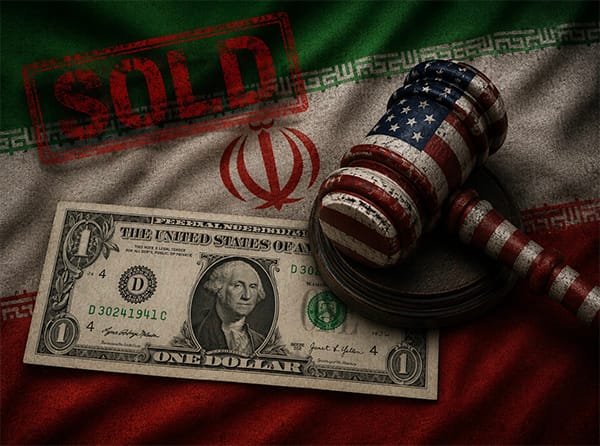
Such a foundation can only be Iran’s future oil revenues. They constitute the real asset capable of serving as collateral for multibillion-dollar financial programmes. The oil has not yet been extracted and the money has not yet been received; nevertheless, future revenues may already be used as the basis for financial calculations in London and New York. In this way a situation arises in which international funds and financial institutions formally appear as the source of financing, while the actual security underlying those funds consists of Iran’s own future revenues.
Yet no fund exists for the sake of the fund itself, for it is inevitably followed by those structures that will “absorb” the resources allocated through it. What is involved, above all, are the major oilfield service, engineering, construction, logistics, and energy groups for which the opening of Iran represents the emergence of a new market worth tens of billions of dollars in contracts. Among the most likely participants in such a process are Bechtel, Fluor, KBR, Jacobs, AECOM, Halliburton, SLB, Baker Hughes, Weatherford, Honeywell, Siemens Energy, Schneider Electric, ABB, Maersk, and DP World.
Under such conditions, the question of who controls the fund acquires primary importance. If Iran’s future oil revenues become the source of collateral, while financing, insurance, and settlements are concentrated in the hands of Anglo-American financial groups, then those same groups will inevitably acquire decisive influence over the distribution of the fund’s resources. This gives rise to a peculiar situation in which Iranian oil becomes the guarantee, while control over that guarantee lies beyond Iran’s borders. Thus a situation emerges in which Iran provides the oil, provides the collateral, and generates the future cash flow, while decisive influence over the movement of that flow is exercised by financial groups located outside the country.
In other words, America and its satellites have imposed upon Iran a system in which “investments” are to be provided against the security of Iranian oil, while the distribution of those investments is concentrated in the hands of American banks and the insurance companies of the City.
The question must therefore be approached not from the standpoint of diplomatic phraseology, but from the standpoint of the agreement itself. If foreign capital is granted access to oil, ports, settlements, insurance, construction, and reconstruction programmes, then a state that retains genuine independence ought, first and foremost, to secure corresponding benefits for itself: the transfer of equipment, the development of domestic industry, the training of national personnel, a share in production, control over technical conditions, supervisory rights over the exploitation of oilfields, and participation in the distribution of future revenues. Otherwise, all talk of reconstruction becomes an empty shell behind which Iran possesses no real freedom of action, but instead finds itself subordinated to the American and Western European kings of capital.
If American, British, European, and Arab structures gain access to Iranian oil, future oil revenues, banking settlements, transport insurance, the reconstruction fund, and major contracting opportunities, then where in this agreement are the guarantees of benefit and improvement of Iran’s position?
There is, however, another question that usually remains in the shadow of discussions about oil, investment, and banking settlements. It concerns the military aspect of the agreement. Every major economic restructuring in the Middle East inevitably touches upon questions of security: control of maritime routes, protection of oil infrastructure, monitoring of missile programmes, arms exports, the activities of the defence industry, and the exchange of intelligence information.
It is therefore necessary to determine not only who will control Iran’s oil revenues, but also what obligations arise in the sphere of security. Who will supervise the implementation of those obligations? Who will monitor military programmes? What rights will foreign structures acquire in matters of control, inspection, and information exchange? How extensive will that control be? What restrictions will be imposed upon particular sectors of Iran’s defence industry, and by which states? And finally, what place will the Iranian armed forces themselves occupy within this system, and what benefits, if any, will accrue to the people of Iran from such arrangements?
It is worth recalling that Iran’s nuclear programme was, from the very beginning, constructed by the same Western corporations and under the control of the same Western capital. The “Atoms for Peace” programme launched by Eisenhower in 1953 was not an act of generosity but an instrument of dependency: developing countries received reactors, fuel, and engineers, and together with them dependence upon American technology, American enrichment services, and American political approval.
Iran entered this system in 1957. In 1967 the American corporation United Nuclear supplied Tehran with highly enriched uranium, MIT signed a contract for the training of Iranian nuclear engineers, and General Electric and Westinghouse received contracts for the construction of eight reactors, a deal valued at $6.4 billion. Kissinger would later state that the question of nuclear weapons proliferation had “not been raised at all” at the time; other questions had been raised — commercial ones.
After the 1979 Revolution, Westinghouse and General Electric withdrew. Siemens–Kraftwerk Union, which had been constructing the Bushehr plant since 1974, abandoned the project under direct pressure from Washington. The station was ultimately completed by Russia — on a German foundation, with Soviet reactors, and within the logic of a different dependency.
There are, as yet, no open answers to these questions. Yet without answering them, it is impossible to arrive at a full assessment of the memorandum’s actual content.
It should not be forgotten, however, that there is no free market; that the market, wholly or almost wholly, is occupied by syndicates, cartels, and trusts, guided by their imperialist profits. Nor should it be forgotten that the old capitalism — in the sense of a free market — has long ceased to exist. One must understand that a tremendous struggle is taking place between monopolies and trusts, a struggle of one against another. Concessionary policy is an alliance concluded by one side against another, and for that reason it is impossible to overlook a country such as China.
China will not remain on the sidelines, for it has long been the principal purchaser of Iranian oil under conditions of sanctions pressure and has learned how to profit from “discounts”, “grey routes”, and “alternative settlement mechanisms”. Following the memorandum, China stands to secure a double advantage. First, it will be able to purchase Iranian oil with a lower risk of secondary sanctions while seeking to preserve existing discounts by referring to contracts already in force. Second, Chinese companies may enter infrastructure and energy projects as contractors and suppliers of equipment, thereby extracting additional concessions from Iran.
Which companies are likely to enter Iran? Above all, Sinopec, CNPC, CNOOC, Bank of China, ICBC, China Construction Bank, COSCO Shipping, China Merchants Port, Huawei, ZTE, PowerChina, and China Energy Engineering Corporation. China’s banking-industrial magnates will act more cautiously than their American counterparts: not through open political diktat, but through long-term oil purchases, infrastructure loans, equipment supplies, port logistics, and settlements in yuan. Yet the underlying logic remains the same. Iran will be drawn not into a single external centre, but into the struggle of several major centres of capital competing for a share of its oil, ports, pipelines, power grids, and future revenues.
Western European capitalists will not remain outside the door either. TotalEnergies, Eni, Shell, BP, Siemens Energy, Maersk, BNP Paribas, Société Générale, Crédit Agricole, Deutsche Bank, Allianz, Zurich, Swiss Re, Munich Re, and others will closely scrutinise the terms of admission. Europe already speaks of “stability”, “freedom of navigation”, “responsibility”, and similar principles.
A special role will be played by international law firms and auditors, above all American ones. One of the most influential is Sullivan & Cromwell, the law firm of Rockefeller. Among its clients was the German-British banking house J. Henry Schroder, one of the key banks of the City of London, whose New York branch participated in the creation of the Anglo-Iranian Oil Company as early as 1917. Allen Dulles served as a director of the New York-based Schroder Banking Corporation. His brother, John Foster Dulles, was a senior partner at Sullivan & Cromwell and represented the same bank in legal matters.
In 1951, Iranian Prime Minister Mohammad Mossadegh nationalised the Anglo-Iranian Oil Company. By the late 1940s and early 1950s, Iran was under the rule of Shah Mohammad Reza Pahlavi. On paper, it was an independent state. In reality, however, Iran functioned as a colonial possession of Britain through the Anglo-Iranian Oil Company: Iranian oil belonged not to the Iranian people but to a British monopoly, while the lion’s share of the profits flowed to the City of London.
In 1949, Mossadegh founded the National Front party. On 15 March 1951, he advocated the nationalisation of Iranian oil, and on 8 April 1951 he was appointed Prime Minister of Iran by a vote of 79 in favour and 12 against. The nationalisation of oil brought Iran into conflict with Britain and the United States. Mossadegh expelled all British specialists and advisers and, in October 1952, severed diplomatic relations with Britain amid the escalating dispute. Mossadegh’s reforms also affected agriculture, most notably through the abolition of the old feudal order in the countryside. In response, the United States and Britain imposed a boycott on Iranian oil and began preparing a coup d’état in Iran.
On 26 February 1953, Allen Dulles was appointed Director of the Central Intelligence Agency by President Eisenhower. The Dulles brothers became the architects of Operation Ajax — the coup d’état carried out in Iran in August 1953. The CIA allocated one million dollars for “any actions which would lead to the fall of Mossadegh”. The operation on the ground was directed by Kermit Roosevelt, grandson of President Theodore Roosevelt.
Following the Iranian coup, Allen Dulles personally flew from Rome together with the Shah in order to accompany his return to Tehran. John Foster Dulles, as Secretary of State of the United States, personally appointed his special representative, Herbert Hoover Jr., to negotiate the formation of a new oil consortium. For this purpose, The American government specifically set aside its antitrust legislation for the purposes of the Iranian settlement so that the largest oil companies could act jointly without the risk of criminal prosecution.
On 29 October 1954, the consortium agreement was signed. The monopoly of the Anglo-Iranian Oil Company was dismantled, while the renamed British Petroleum retained its 40 per cent share. Another 40 per cent was divided equally among five American companies — Standard Oil of New Jersey, Standard Oil of California, Texaco, Socony-Vacuum, and Gulf Oil. The remaining 20 per cent was shared between Royal Dutch Shell and the French Compagnie Française des Pétroles.
Sullivan & Cromwell structured the arrangement in such a way that Iran retained nominal ownership of its oil through the National Iranian Oil Company, while real control over extraction, refining, transportation, and international marketing passed to the consortium for a period of twenty-five years.
Today, Sullivan & Cromwell co-chair Robert Giuffra personally represents Donald Trump in a criminal appellate proceeding. Former partner Jay Clayton first chaired the Securities and Exchange Commission during the first Trump administration and later became United States Attorney for the Southern District of New York. Partner James McDonald has been nominated to the same position. The firm’s revenue reached $2.1 billion in 2025.
White & Case is the legal house of Morgan. The firm’s Iran practice is conducted through three specific partners in its Washington office. David Bond heads the global international trade practice. Claire DeLelle leads the Iran sanctions practice; she has personally conducted investigations into Iranian sanctions violations for Middle Eastern clients, regularly interacted with officials of the Office of Foreign Assets Control, and obtained the release of frozen assets through that agency. David Lim joined the firm directly from the Department of Justice, where he headed an interagency sanctions enforcement group. When the memorandum begins to be implemented, it will be these individuals who oversee the companies served by the firm.
Freshfields has served as legal adviser to the Bank of England since 1743 without interruption. The firm’s Iran practice is conducted from Vienna, where all rounds of the JCPOA nuclear negotiations took place. In September 2025, when France, Germany, and the United Kingdom activated the snapback mechanism and the European Union restored sanctions against Iran, Freshfields published a detailed analysis of the consequences for European business. In other words, the firm was already advising clients preparing for a reversal of policy.
Partner Pervez Akhtar advises on mergers and acquisitions and joint ventures in energy, insurance, and financial services throughout the MENA region. Her sector within the Iranian arrangement is European banking and energy capital: Barclays, HSBC, Shell, and BNP Paribas.
Clifford Chance emerged from the merger of two London firms in 1987. One of them, Coward Chance, had served British companies throughout the entire sphere of colonial trade since 1802. It later became principal counsel to Midland Bank and to the post-war American and Japanese banks establishing London offices. For decades, the firm’s principal client was Barclays. Former Clifford Chance partner Mark Harding became the bank’s General Counsel, providing the firm with a continuous stream of work.
Today, its clients in banking and arbitration include Goldman Sachs, HSBC, Crédit Agricole, and Standard Chartered. In energy, its clients include Shell, GE, Glencore, and Sinopec. In insurance, it is active within the Lloyd’s market, where partner James Cashill specialises in reinsurance and corporate transactions involving insurance companies.
The firm’s Iran practice is led by George Kleinfeld, a Washington partner with three decades of experience specifically in Iranian sanctions matters. He has personally represented clients before OFAC in Iranian investigations, obtained nearly one hundred licences under sanctions programmes, and manages the Iranian portfolio for major financial institutions and trading companies across Europe and the Middle East.
One of the firm’s documented arbitration cases involved representing a British government body in a long-running dispute with Iran. Within the Iranian arrangement, Clifford Chance is positioned to cover three specific segments: banking transactions through HSBC and Barclays in the event of sanctions relief; cargo and risk insurance through Lloyd’s market channels; and the structuring of oil and gas concessions through relationships with Shell and Glencore.
Latham & Watkins is the second-highest-grossing law firm in the world, generating $8.3 billion in revenue in 2025, with profits per partner reaching $8.65 million. The firm states that it ranks first globally by the number of LNG transactions handled among all law firms, a claim supported by rankings published by IJGlobal, Infralogic, and LSEG. In the petrochemicals sector, it likewise maintains that it has advised on more transactions than any other law firm.
Its London office is responsible for project finance throughout the Middle East, Africa, and Asia. Tom Bartlett, who leads the team, specialises specifically in Middle Eastern projects. Clément Fondufe heads the oil and gas sector, while David Ziambi focuses on financing for multinational energy companies. Partner Jeffrey Greenberg advises on LNG, renewable energy, and conventional energy transactions on behalf of both sponsors and lenders.
The sanctions practice is headed by Les Carnegie from the Washington office, who also leads the firm’s CFIUS practice. Andrew Galdes, who became a partner in 2025, joined the partnership with extensive experience in the enforcement of Iranian sanctions.
Skadden is a firm that built its reputation through hostile takeovers and became one of the principal legal advisers in major corporate battles and restructurings. Behind it stand some of the world’s largest private investment funds and energy corporations. In the Iranian context, its specialisation lies in mergers and acquisitions, asset reallocations, and the structuring of joint ventures between Western and Iranian capital.
Linklaters, a firm of the City of London, has traditionally served Deutsche Bank, major European banks, and sovereign wealth funds. Within the Iranian arrangement, it is likely to handle debt instruments, sovereign bonds, and the structuring of state development funds through which Western capital will be channelled.
Deloitte, PwC, EY, and KPMG constitute the Big Four of audit, with combined revenues exceeding $220 billion and operations in more than 150 countries. Their functions within the Iranian arrangement are divided by sector. Deloitte focuses on technology and operational audits of state institutions; PwC, through Strategy&, on strategic consulting and the valuation of oil assets; EY on private capital and investment fund advisory services; and KPMG on sanctions compliance, customs, and trade settlements, where the firm already maintains a specialised Iranian practice.
The most naïve mistake is to assume that this memorandum represents a capitulation by the United States to Iran, as some American military generals believe.
What has changed is not the objective, but the form of pressure. A direct military blockade has become too costly for the United States, and is therefore being replaced by a system of controlled access. Iran is told: sell your oil, but through approved channels; receive your money, but through supervised banks; rebuild your economy, but through our funds; reopen Hormuz, but under international oversight; attract investment, but on terms determined by those who control insurance, settlements, shipping, auditing, and credit.
It is precisely here that the military question is transformed into a financial one. Previously, pressure took the form of warships, military strikes, sanctions, and threats. Now it will take the form of an insurance premium, a banking refusal, a delayed tranche, a compliance review, an audit finding, a revision of a credit limit, the withdrawal of a guarantee, an increase in interest rates, or a contractual clause. Softer in appearance but harsher in substance, this system does not destroy a state from the outside. Instead, it restructures its monetary and commercial arteries in such a way that every major decision becomes dependent upon Wall Street and the City of London.
The pro-Israel factor also plays a significant role in the so-called “deal”. It is embodied in political groups within the United States associated with support for Israel, the concept of “regional military security”, Republican political circles, defence contractors, oil interests, and financial donors. These groups will exert pressure upon the American administration, demanding strict conditions regarding nuclear oversight, limitations on missile capabilities, and scrutiny of Iran’s relations with allied forces throughout the region.
They may oppose excessive concessions to Tehran, yet part of the same political camp will also recognise that the managed integration of Iran into the market is more advantageous than perpetual war. Consequently, the struggle will not be between “peace” and “war”, but between two different methods of control: military coercion and financial management.
At the same time, it would be mistaken to portray the situation as a process in which one side gains everything and the other gains nothing. Access to world markets, increased oil exports, an inflow of technology, the restoration of financial settlements, and expanded investment opportunities represent tangible benefits for Iran. Yet it is precisely for that reason that the central question arises: will Iran succeed in using the interest of world capital to strengthen its own economic position, or will those future benefits ultimately be purchased at the cost of surrendering control over the country’s key financial and oil flows?
The principal question of the coming years will not be whether Iran can sell oil. It can. The principal question is who will determine the conditions under which that oil is sold.
If prices are determined by Vitol, Trafigura, Glencore, and Chinese buyers; if insurance remains dependent upon London; if settlements pass through Gulf banks operating under Western supervision; if the resources of Iran’s “reconstruction fund” are held by American, Arab, European, and Asian capital and distributed under their oversight; if auditing and legal services are provided by the largest Western firms, then a picture emerges in which Iran becomes subject to imperialist seizure and partition by the major powers.
Intervention is not necessarily military in form. More often than not, it assumes economic forms that subordinate the entire economic, political, and commercial life of a country to the will of the intervening powers — namely, to the masters of large-scale capital.
The world situation inevitably sharpens class contradictions, leading toward an era of immense social struggles.
UNDERSTAND THE MECHANISM.
NOT JUST THE NEWS — REVEALED IN OUR BOOK.
“THE POWER OF SELF-SEEKERS & GRABBERS” → BUY NOW
“Not a book about Putin. A book about the machine that keeps him in power.”
Release Date: June 22, 2026
Автор: Vladimir H.
Editorial Board “The Eastern Post”
Publisher: The Eastern Post, London-Paris, United Kingdom-France, 2026.
Read other analytical materials on easternpost.uk and subscribe to our updates.